
Receiving a lab report showing borderline high blood sugar—commonly categorized as prediabetes or impaired fasting glucose—can leave you feeling uncertain about what belongs on your plate. For decades, outdated dietary myths urged anyone watching their glucose to eliminate fruit altogether due to its natural sugar content. This sweeping restriction often backfires. Cutting out whole fruit deprives your cardiovascular and metabolic systems of essential antioxidant polyphenols, vascular-protective vitamins, and viscous soluble fibers that actively enhance insulin sensitivity.
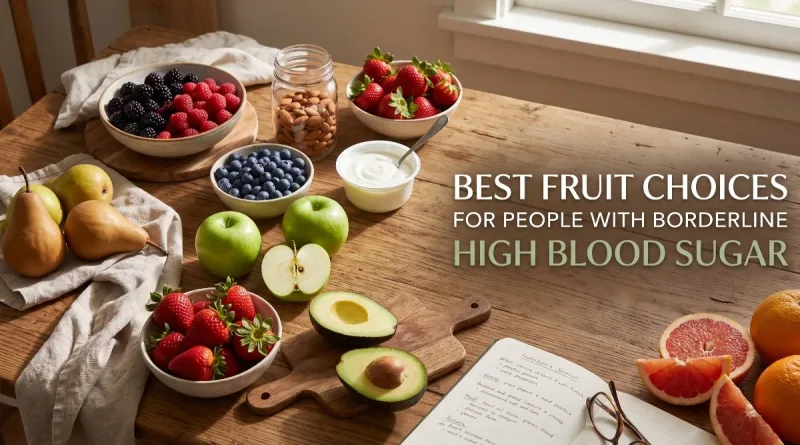
The secret lies in choosing whole fruits that have a low glycemic impact and eating them in ways that blunt glucose spikes. The best fruit choices for people with borderline high blood sugar are whole, fiber-dense fruits rich in anthocyanins, pectin, and organic acids that slow down gastric emptying and curb postprandial glucose surges. Foundational selections include wild blueberries, blackberries, raspberries, crisp green apples, firm pears, tart cherries, whole strawberries, and fresh avocados.
When managed strategically, incorporating whole fruit into your weekly meal planning is a powerful tool to help prevent prediabetes from progressing to type 2 diabetes. Below is an exhaustive clinical guide exploring the biophysics of fruit sugars, the critical distinction between Glycemic Index (GI) and Glycemic Load (GL), the top blood-sugar-friendly fruits, and practical food-pairing rules to keep your glucose readings steady.
The Physiology of Fruit Sugars: Fructose vs. Whole Food Matrix
To make informed choices, it helps to understand how your body processes fruit sugar at a cellular level.
Whole fruits contain a mixture of three primary carbohydrates: fructose, glucose, and sucrose.
-
The Fructose Pathway: Unlike glucose, which directly enters systemic circulation and prompts an immediate insulin release from pancreatic beta cells, fructose is transported through the portal vein straight to the liver via the GLUT5 transporter. In small, physiological amounts, fructose does not cause an immediate surge in blood glucose or trigger insulin spikes.
-
The Danger of Liquid Fructose: When consumed in liquid or refined form (such as fruit juices, fruit purees, or commercial high-fructose corn syrup), high concentrations of free fructose flood the liver. The liver cannot metabolize this sudden influx quickly enough, converting the excess sugar directly into triglycerides via de novo lipogenesis. This drives hepatic insulin resistance and elevates systemic inflammation.
-
The Intact Cellular Matrix: In whole fruit, fructose and glucose are locked inside complex cellular structures made of insoluble cellulose and soluble pectin fiber. When you chew and digest whole fruit, these intact cellular walls must be broken down by digestive enzymes. This physical barrier ensures that sugars are released gradually into the small intestine over several hours, keeping blood sugar smooth and manageable.
Whole fruit is not just a carrier of carbohydrates; it delivers water, prebiotic fibers, bioflavonoids, and micronutrients that slow carbohydrate breakdown in the gut.
Glycemic Index (GI) vs. Glycemic Load (GL): The Smarter Metric
When evaluating fruit for borderline high blood sugar, looking only at the Glycemic Index can be misleading. You need to consider both GI and Glycemic Load (GL):
-
Glycemic Index (GI): Ranks carbohydrates from 0 to 100 based on how rapidly they raise blood glucose compared to pure glucose (rated at 100). Low GI foods score 55 or below.
-
Glycemic Load (GL): Evaluates the speed of the glucose rise and the total volume of carbohydrates packed into a typical, real-world portion. The mathematical formula is:
A low Glycemic Load is defined as a score of 10 or below. For example, watermelon has a relatively high GI (around 72) because its small carbohydrate content digests quickly. However, because watermelon is over 90% water, an average 100-gram serving contains only 6 grams of carbohydrates, resulting in a low Glycemic Load of roughly 4 to 5.
For steady metabolic control, prioritizing fruits with both a low GI ($\le 55$) and a low GL ($\le 10$) provides the best balance of safety and sustained nutrition.
8 Best Fruit Choices for People with Borderline High Blood Sugar
These nutrient-rich fruits provide exceptional flavor, dense micronutrients, and superior glycemic control:
1. Blackberries and Raspberries
Blackberries and raspberries are metabolic powerhouses. They offer one of the highest fiber-to-net-carb ratios of any food in the produce aisle.
-
Glycemic Profile: Glycemic Index is approximately 25 to 32; Glycemic Load is under 4 per cup.
-
Nutritional Mechanism: A single cup of fresh raspberries delivers an impressive 8 grams of dietary fiber against just 7 grams of net carbohydrates. Much of this is soluble fiber, which forms a thick, gelatinous mesh in the digestive tract. This gel slows the absorption of carbohydrates, blunting postprandial glucose curves. Furthermore, both berries are rich in ellagitannins, polyphenols shown to inhibit the alpha-amylase enzyme in saliva and pancreatic secretions, naturally moderating starch digestion.
-
Serving Recommendation: 1 full cup (approx. 125g to 140g) fresh or unsweetened frozen berries.
2. Wild Blueberries
While all blueberries are nutritious, wild blueberries (Vaccinium angustifolium) are smaller, contain less water, and pack higher concentrations of bioactive skin pigments than cultivated varieties.
-
Glycemic Profile: Glycemic Index is roughly 40 to 53; Glycemic Load is approximately 6 to 7.
-
Nutritional Mechanism: Blueberries owe their deep indigo hue to anthocyanins (specifically delphinidin and malvidin). Clinical trials indicate that anthocyanins improve cellular insulin signaling by upregulating GLUT4 glucose transporters in skeletal muscle tissue. This enables muscle cells to clear glucose out of the bloodstream more effectively, without requiring extra insulin from the pancreas.
-
Serving Recommendation: 1/2 to 3/4 cup of fresh or unsweetened wild blueberries.
3. Crisp Tart Green Apples (Granny Smith)
The classic crisp green apple remains one of the most reliable and portable fruits for stabilizing blood sugar.
-
Glycemic Profile: Glycemic Index is roughly 36 to 39; Glycemic Load is approximately 5 to 6.
-
Nutritional Mechanism: Green apples contain lower amounts of total sugar and higher concentrations of malic acid and soluble pectin compared to sweeter red varieties like Honeycrisp or Gala. Pectin acts as a prebiotic, feeding beneficial gut microbes (Bifidobacteria and Akkermansia muciniphila) that produce short-chain fatty acids (SCFAs). These SCFAs improve metabolic health and systemic insulin sensitivity.
-
Serving Recommendation: 1 small-to-medium whole apple. Always eat the skin intact, as the peel holds the majority of the fiber, quercetin, and antioxidant polyphenols.
4. Tart Montmorency Cherries
Tart cherries are distinct from sweet Bing cherries, offering an intensely sour flavor profile driven by low sugar concentrations and high organic acid content.
-
Glycemic Profile: Glycemic Index is roughly 22 to 25; Glycemic Load is under 4.
-
Nutritional Mechanism: Tart cherries contain substantial concentrations of chlorogenic acid, procyanidins, and melatonin. Chlorogenic acid delays glucose absorption across the intestinal brush border membrane by inhibiting the sodium-dependent glucose transporter 1 (SGLT1). Their low natural sugar count makes them one of the safest fruits for those with borderline glucose levels.
-
Serving Recommendation: 1/2 to 3/4 cup of fresh, pitted tart cherries, or 1/4 cup unsweetened, 100% pure tart cherry concentrate diluted in a large glass of sparkling water.
5. Firm Pears (Bartlett, Bosc, or Anjou)
Pears are deeply satisfying, subtly sweet fruits packed with dietary fiber.
-
Glycemic Profile: Glycemic Index is roughly 38; Glycemic Load is approximately 5.
-
Nutritional Mechanism: A medium pear provides around 6 grams of fiber, over half of which is insoluble lignin and cellulose. This insoluble fiber adds bulk to digestive contents, speeding up transit through the intestines while slowing the enzymatic breakdown of surrounding food starches. Pears also provide copper and vitamins C and K, essential cofactors for healthy cellular metabolism.
-
Serving Recommendation: 1 small-to-medium pear, preferably consumed when slightly firm. As fruit overripens, complex starches naturally break down into simpler, faster-digesting free sugars.
6. Fresh Strawberries
Bright, sweet, and widely available, fresh strawberries are remarkably gentle on blood sugar.
-
Glycemic Profile: Glycemic Index is roughly 40 to 41; Glycemic Load is under 3.
-
Nutritional Mechanism: Strawberries are more than 90% water by weight and contain an impressive payload of vitamin C (ascorbic acid). Clinical studies demonstrate that consuming strawberries alongside a carbohydrate-rich meal reduces the total insulin release required to process the food. Their bioactive compound, fisetin, also exhibits anti-inflammatory and cellular longevity benefits that protect microvascular circulation from early oxidative stress.
-
Serving Recommendation: 1 cup of whole or sliced fresh strawberries.
7. Fresh Hass Avocados
Many people forget that the creamy avocado is botanically a single-seeded berry. For managing borderline blood sugar, it is peerless.
-
Glycemic Profile: Glycemic Index is effectively 0 to 15; Glycemic Load is zero.
-
Nutritional Mechanism: Unlike conventional sweet fruits, avocados are composed almost entirely of heart-healthy monounsaturated fatty acids (oleic acid) and dietary fiber, with less than 1 gram of active sugar per serving. Adding avocado to any meal slows gastric emptying and stimulates the release of peptide YY and cholecystokinin (CCK), two gut hormones that signal satiety to the brain and prevent between-meal cravings.
-
Serving Recommendation: 1/3 to 1/2 of a medium Hass avocado mashed onto high-fiber toast or diced into salads.
8. Fresh Citrus (Grapefruit and Oranges)
Citrus fruits offer a refreshing balance of gentle sweetness, hydration, and acidity.
-
Glycemic Profile: Grapefruit has a low GI of approximately 25 to 28; whole oranges average around 40 to 43.
-
Nutritional Mechanism: Citrus fruits are rich in naringenin and hesperidin, two bioactive citrus bioflavonoids. Naringenin mimics the metabolic signaling of insulin and activates adenosine monophosphate-activated protein kinase (AMPK), the body’s master metabolic regulator. Activating AMPK encourages skeletal muscle cells to take up glucose directly from the bloodstream.
-
Serving Recommendation: Half a medium grapefruit or one small whole orange. Eat the whole citrus fruit segments rather than drinking the extracted juice to preserve the albedo (the white, fibrous inner layer), which contains the highest concentrations of beneficial flavonoids and pectin.
4 Strategic Food-Pairing Rules to Prevent Glucose Spikes
How you eat fruit is just as important as the specific fruit you pick. Applying these four clinical pairing strategies will help keep your post-meal glucose readings stable:
-
Always "Dress" Your Carbohydrates (Add Protein and Fat): Never eat a sweet fruit by itself on an empty stomach. Consuming naked carbohydrates allows the stomach to empty its contents rapidly into the duodenum, accelerating glucose absorption. Pair fruit with healthy fats or lean proteins: enjoy an apple with two tablespoons of natural peanut butter, or fold fresh blackberries into a cup of plain, unsweetened Greek yogurt. The lipids and amino acids delay gastric emptying, flattening the blood sugar curve.
-
Never Drink Your Fruit: Drinking 8 ounces of orange juice delivers the concentrated simple sugars of three to four whole oranges within seconds, completely stripped of their structural insoluble fiber. This liquid sugar rush floods the portal vein, driving instant spikes in blood glucose and liver fat synthesis. Always eat your fruit whole, chewing thoroughly to stimulate cephalic digestive phase enzymes.
-
Select Slightly Underripe Fruit: As fruit sits on the counter and ripens, enzymes break down complex resistant starches and pectins into simple, free-floating glucose and fructose molecules. Choosing bananas with a slight greenish tint or pears that are firm to the touch ensures you consume more resistant starch, which feeds beneficial gut flora and keeps the glycemic load low.
-
Time Fruit Intake Around Physical Activity: Enjoying a small serving of fruit 30 minutes before a brisk walk or right after a workout directs incoming glucose straight into skeletal muscle tissue. Contracting muscles utilize non-insulin-dependent GLUT4 translocation, soaking up circulating glucose without demanding extra insulin production from your pancreas.
High-Glycemic Fruits to Limit or Avoid
When working to reverse borderline high blood sugar, limit these high-glycemic or sugar-dense fruits:
-
Dried Fruits (Raisins, Dates, and Dried Figs): Removing moisture concentrates the sugars into tiny, dense packages. A small handful of raisins contains nearly the same sugar load as a massive bowl of fresh strawberries, making portion control exceptionally difficult.
-
Canned Fruits in Heavy or Light Syrup: Canned fruits packed in flavored syrup are saturated with added sucrose or high-fructose corn syrup, turning a healthy fruit into a high-GI dessert.
-
Tropical Fruits in Large Portions (Ripe Mangoes, Pineapple, and Papaya): While packed with enzymes, tropical fruits have higher Glycemic Index ratings (often ranging from 60 to 75) and higher concentrations of fast-acting sugars. If you eat them, keep portions small (1/3 cup) and always pair them with raw nuts or unsweetened Greek yogurt.
-
Overripe Brown-Spotted Bananas: A ripe, heavily spotted banana has converted virtually all its resistant starch into simple sugars, raising its GI into the medium-to-high zone (65+). Opt for smaller, slightly green bananas instead.
When to Seek Clinical Evaluation for High Blood Sugar
Dietary interventions are the most effective foundation for reversing prediabetes, but routine laboratory monitoring ensures your metabolic markers are moving in the right direction.
Consult your primary care physician, endocrinologist, or a registered dietitian if you notice:
-
Progressive Laboratory Spikes: Fasting plasma glucose consistently testing at or above 126 mg/dL, or your hemoglobin A1c test reaching 6.5% or higher on two separate tests, which marks the clinical threshold for type 2 diabetes.
-
Persistent Lethargy and Brain Fog: Extreme exhaustion following standard balanced meals, indicating reactive hypoglycemia or cellular insulin exhaustion.
-
The "3 Ps" of Metabolic Distress: Noticeable increases in polydipsia (unquenchable thirst), polyuria (frequent urination, particularly waking multiple times at night), or polyphagia (constant, intense hunger despite regular meals).
-
Acanthosis Nigricans: Darkened, velvety pigmentation along the back of the neck, armpits, or groin folds, signaling advanced systemic insulin resistance.
-
Frequent Infections or Slow Healing: Cuts, scrapes, or minor skin blemishes that take weeks to heal, indicating that elevated blood glucose is impairing microvascular capillary circulation and immune responses.
Medical Disclaimer: The information presented in this guide is designed strictly for educational and informational purposes and must not replace individualized clinical advice, laboratory testing, or personalized medical treatment. If you have been diagnosed with prediabetes, insulin resistance, or diabetes, always consult a licensed physician, endocrinologist, or certified diabetes care and education specialist (CDCES) before making substantial adjustments to your dietary habits.




Comments
No comments yet. Be the first to ask a question or share an update.
Leave a comment
Your mobile number is never published. Comments appear after review. Website links, email addresses and code are not allowed.