
Few things are as frustrating as watching your nails chip, flake, and split in layers just when they finally start gaining length. Brittle, peeling fingernails—known clinically as onychoschizia—are an extraordinarily common issue. While external factors like cold weather, frequent handwashing, and acetone removers take a toll, topical oils and clear coats can only treat the surface.
The root of nail health lies deep beneath the cuticle in the nail matrix. To grow resilient, flexible, and lustrous nails, you must feed your body the specific raw materials needed to construct durable keratin bonds.
If you want to know which foods to eat daily to help strengthen brittle peeling fingernails, this guide breaks down the biological science of nail growth and outlines the ultimate grocery list for restoring strength from within.
The Biology of Weak Nails: Why Do Fingernails Peel and Split?
Fingernails are composed of tightly packed, dead cells hardened by a fibrous structural protein called alpha-keratin. The nail plate consists of roughly 25 to 30 layers of these flattened epithelial cells glued together by intercellular lipids and secured by sulfur-rich chemical bridges called disulfide bonds.
When your nails peel into sheets or break under slight tension, it points to one of three biological disruptions:
-
Deficient Keratin Synthesis: If your diet lacks essential amino acids, sulfur, or key trace minerals, the nail matrix cannot produce dense, thick keratin layers.
-
Impaired Microcirculation and Cellular Turnover: Nail matrix cells divide rapidly. Low iron or B-vitamin levels reduce oxygen transport to your fingertips, slowing growth and creating thin, ridged, and fragile nail plates.
-
Internal Moisture and Lipid Depletion: Healthy nails contain roughly 10% to 18% water along with trace natural lipids. Without adequate essential fatty acids, the intercellular glue dries out, causing horizontal peeling along the free edge.
The solution is not a synthetic multivitamin; it is consistent, daily intake of nutrient-dense whole foods designed to build healthy tissue.
7 Best Foods to Eat Daily to Help Strengthen Brittle Peeling Fingernails
1. Whole Pasture-Raised Eggs
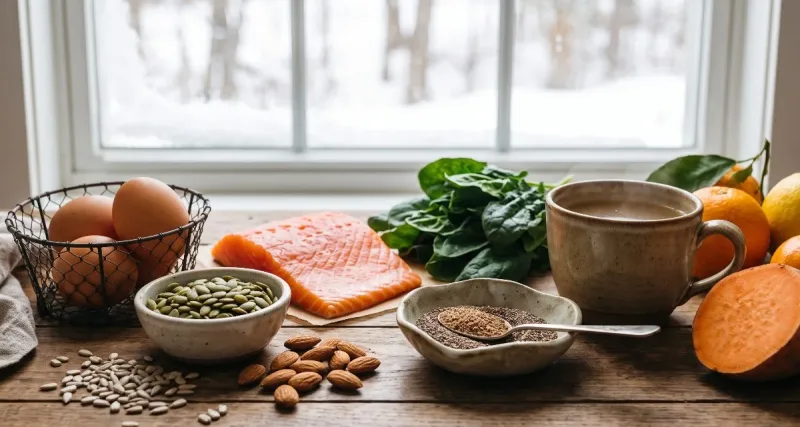
Eggs are widely regarded as nature's ultimate nail supplement.
-
The Key Nutrients: Complete protein, biotin (vitamin B7), sulfur-containing amino acids (cysteine and methionine), and choline.
-
Why Nails Need Them: Keratin is made of protein, and cysteine is the specific amino acid that forms strong disulfide bonds to keep nail layers bonded. Furthermore, biotin supports fatty acid metabolism and protein building within the nail matrix. Clinical trials consistently show that daily biotin intake increases nail plate thickness and significantly curbs splitting.
-
Daily Recommendation: Eat 1 to 2 whole eggs daily. Ensure you eat the yolk, as that is where almost all the biotin and essential lipids reside.
2. Wild-Caught Fatty Fish (Salmon, Mackerel, Sardines)
Dryness and lack of elasticity are primary drivers of peeling nails. Fatty cold-water fish provide the foundational fats that prevent structural brittleness.
-
The Key Nutrients: Omega-3 fatty acids (EPA and DHA), high-biological-value protein, and vitamin D.
-
Why Nails Need Them: Omega-3 fatty acids lubricate the nail bed from within, dampening low-grade inflammation that disrupts matrix cellular turnover. They maintain the lipid layer between the horizontal sheets of keratin, helping your nails bend under impact rather than snap or flake off.
-
Daily Recommendation: Incorporate 3 to 4 servings of fatty fish weekly, or rotate between wild salmon, sardines, and plant-based omega-3s like chia and hemp seeds every day.
| Food Item | Primary Target Nutrients | How It Restores Nail Strength |
| Pasture-Raised Eggs | Biotin, Cysteine, Methionine | Rebuilds keratin disulfide bonds; thickens nail plates |
| Wild Fatty Fish | Omega-3s (EPA/DHA), Vitamin D | Locks moisture in nail bed; prevents dry layering |
| Raw Pumpkin Seeds | Bioavailable Zinc, Magnesium | Fuels rapid cell division in the matrix; stops white spots |
| Dark Leafy Greens | Non-Heme Iron, Folate, Vitamin C | Supplies oxygen to fingertips; eliminates ridging |
| Hydrolyzed Collagen | Proline, Glycine, Hydroxyproline | Strengthens connective tissue and speeds growth |
| Raw Almonds | Vitamin E, Monounsaturated Fats | Protects cell membranes from oxidative stress |
3. Raw Pumpkin Seeds (Pepitas)
If you notice small white spots (leukonychia) or nails that grow at a snail's pace, zinc deficiency is often the culprit.
-
The Key Nutrients: Zinc, magnesium, copper, and plant-based iron.
-
Why Nails Need Them: Zinc is an essential cofactor for hundreds of enzymatic reactions, specifically DNA replication and protein synthesis. Because the cells in the nail matrix replicate continuously, they are sensitive to minor dips in zinc. Adequate zinc ensures rapid cellular turnover, giving you an even, ridge-free surface.
-
Daily Recommendation: Add 1 to 2 tablespoons of raw pumpkin seeds to your morning oatmeal, salads, or smoothies.
4. Spinach and Dark Leafy Greens
Oxygen delivery is the unsung hero of healthy fingertip biology. If your cells cannot breathe, they cannot build strong protective shields.
-
The Key Nutrients: Non-heme iron, folate (vitamin B9), and vitamin C.
-
Why Nails Need Them: Red blood cells rely on iron to manufacture hemoglobin, which transports oxygen to your peripheral extremities. Mild iron deficiency or low ferritin stores cause nail beds to pale, turn brittle, and develop vertical grooves or concave "spooning" (koilonychia). Dark greens also provide folate, necessary for building new red blood cells.
-
Daily Recommendation: Aim for 1 to 2 cups of raw dark greens (spinach, kale, Swiss chard) or 1 cup steamed daily. Squeeze fresh lemon juice over them to enhance plant-iron absorption with vitamin C.
5. Bone Broth or Hydrolyzed Collagen Peptides
While nails are composed of keratin rather than collagen, the matrix and surrounding dermal tissues rely on a steady supply of structural peptides.
-
The Key Nutrients: Glycine, proline, hydroxyproline, and trace minerals.
-
Why Nails Need Them: Supplementing with dietary collagen peptides provides the specific amino acid building blocks required for microvascular circulation to the nail bed. Clinical studies have shown that daily consumption of collagen peptides increases nail growth speed by up to 12% while reducing broken nail frequency by 42%.
-
Daily Recommendation: Drink one warm mug of slow-simmered bone broth daily, or stir 10 to 15 grams of unflavored collagen peptide powder into your morning tea, coffee, or smoothie.
6. Almonds and Sunflower Seeds
Nail beds are rich in micro-capillaries that require protection against free radicals and environmental oxidative stress.
-
The Key Nutrients: Vitamin E (alpha-tocopherol), selenium, and monounsaturated fatty acids.
-
Why Nails Need Them: Vitamin E is a potent fat-soluble antioxidant that preserves cellular membrane integrity. It prevents yellowing, supports smooth microcirculation to the peripheral limbs, and maintains healthy natural oil production around the cuticles.
-
Daily Recommendation: Enjoy a small handful (roughly 15–20 almonds or a tablespoon of sunflower seeds) as an afternoon snack.
7. Sweet Potatoes and Carrots (Beta-Carotene)
The health of your nails is inextricably linked to systemic epithelial tissue renewal.
-
The Key Nutrients: Beta-carotene (pro-vitamin A) and potassium.
-
Why Nails Need Them: Vitamin A is vital for the growth and differentiation of epithelial cells, including those forming the cuticle and the nail root. A systemic deficiency leads to dry, dull, easily split nails surrounded by cracked, painful cuticles and hangnails.
-
Daily Recommendation: Include half a baked sweet potato or one large raw carrot in your daily meals, paired with a small amount of healthy fat (like olive oil) to maximize beta-carotene absorption.
4 External Habits to Protect Your Nutrition Investment
Fueling your body from within creates strong new nail growth, but fingernails only advance roughly 3 millimeters per month. It takes four to six months to grow an entirely new fingernail from base to tip.
To keep your existing nail plate from peeling while your new, stronger keratin emerges, follow these external rules:
-
Wear Rubber Gloves During Wet Work: Water is one of the biggest enemies of brittle nails. When nails soak up water, the keratin layers swell; as they dry, they shrink. This repetitive cycle breaks the intercellular bonds, causing the tips to separate into sheets. Wear cotton-lined rubber gloves when doing dishes or handling household cleaners.
-
Switch to Acetone-Free Removers: Acetone is a harsh solvent that dissolves the natural lipids in your nail plate on contact. If you wear polish, opt for an acetone-free, soy-based remover.
-
Condition the Cuticles with Squalane or Jojoba: Avoid water-based lotions that evaporate quickly. Massage pure jojoba oil or sugarcane squalane directly into the cuticle and nail bed nightly. Jojoba has a low molecular weight that can penetrate the dense keratin plate to keep it pliable.
-
File in One Direction: Never saw your nail back and forth with a coarse emery board. Use a fine-grit glass or crystal nail file and stroke in one continuous direction from the edge toward the center to avoid fraying the keratin edges.
Medical Disclaimer:The nutritional strategies and educational insights provided in this article are intended for general health awareness and are not a substitute for professional medical advice, clinical diagnosis, or medical treatment. Brittle, discolored, clubbed, or severely peeling nails can sometimes indicate underlying medical issues such as anemia, thyroid disorders, fungal infections, or autoimmune conditions. Always consult a board-certified dermatologist, podiatrist, or primary care physician before beginning new supplementation or if your nail symptoms persist, worsen, or are accompanied by pain.

Comments
No comments yet. Be the first to ask a question or share an update.
Leave a comment
Your mobile number is never published. Comments appear after review. Website links, email addresses and code are not allowed.