
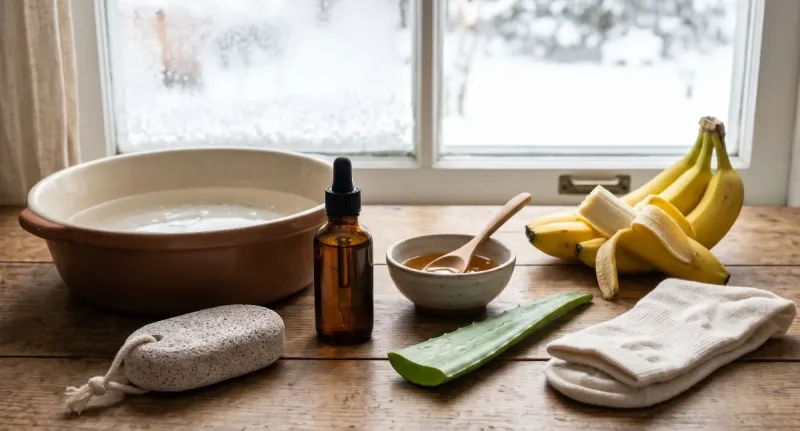
When winter strikes, or when we spend long hours on our feet in open-back shoes, our heels bear the brunt of the pressure. Left untreated, dry skin on the feet can progress from cosmetic rough patches into painful, deeply cracked heels—a condition medically known as heel fissures.
Deeply cracked heels are not just unsightly; they can make every step agony and can even become infected if they begin to bleed. Fortunately, you don’t need expensive salon pedicures or harsh chemical peels to get relief. By using the right natural, deeply penetrative ingredients already found in your kitchen and pantry, you can repair your skin's protective barrier, soften stubborn calluses, and heal deeply cracked heels fast at home.
Why Do Heels Crack? Understanding the Science Behind Heel Fissures
To heal cracked heels effectively, it is important to understand why they happen.
The skin on your heels is naturally thicker, tougher, and less elastic than the skin on the rest of your body. It has no oil (sebaceous) glands and relies entirely on sweat glands to stay hydrated. When this naturally dry skin is subjected to the mechanical pressure of walking, the fat pad under the heel expands sideways. If the skin is lacking moisture and elasticity, it cannot stretch; instead, it splits and cracks.
The most common causes of deeply cracked heels include:
-
Dehydration & Lack of Moisture: The primary culprit.
-
Prolonged Standing: Extra pressure on the heel fat pad on hard floors.
-
Open-Back Shoes & Sandals: Footwear that allows the heel's fat pad to expand sideways.
-
Harsh Soaps: Stripping the skin of what little natural moisture it has.
-
Medical Conditions: Such as diabetes, thyroid issues, eczema, or athlete's foot, which dry out the skin further.
Now, let's explore the most potent, scientifically backed natural remedies to heal these deep fissures and restore your feet to baby-soft health.
7 Proven Natural Remedies to Heal Deeply Cracked Heels Fast at Home
1. The Nourishing Epsom Salt & Warm Water Soak
Before you apply any healing balms or oils, you must soften the tough, dead skin (the stratum corneum) that surrounds the fissures. Trying to moisturize hard, dead skin is ineffective because the moisture cannot penetrate the thick barrier.
-
How to do it: Fill a foot basin with warm (not hot) water. Add half a cup of Epsom salt (magnesium sulfate). Magnesium helps reduce inflammation, while the salt softens the keratin bonds in the dead skin.
-
Duration: Soak your feet for 15 to 20 minutes.
-
The Next Step: Gently use a wet pumice stone or a natural foot file to buff away the loosened, dead skin. Never scrub aggressively, and avoid using razor-like tools, which can worsen deep fissures. Gently pat your feet dry.
2. The Healing Vegetable Oil "Sock Treatment"
Natural vegetable oils—such as extra virgin olive oil, coconut oil, or almond oil—are packed with fat-soluble vitamins (A, D, and E) and rich emollients. These natural oils fill the microscopic gaps between skin cells, rebuilding the lipid barrier and locking in essential moisture.
-
How to do it: After soaking and gently exfoliating your feet (ideally before bed), apply a generous amount of unrefined coconut oil or olive oil to your heels.
-
The Healing Boost: Massage the oil deeply into the cracks for 3–5 minutes to stimulate blood circulation and promote faster tissue repair.
-
The Secret: Put on a pair of 100% breathable cotton socks. This prevents the oil from rubbing off on your bedding, traps natural body heat, and allows the oils to penetrate deeply into the dermis overnight.
| Remedial Method | Active Property | Healing Mechanism | Best Time to Apply |
| Epsom Salt Soak | Keratolytic & Anti-inflammatory | Softens hard skin, reduces pain | Night (before bed) |
| Vegetable Oils | Rich Emollients | Replenishes lipids, seals moisture | Overnight (under socks) |
| Raw Honey Mask | Humectant & Antimicrobial | Draws moisture, prevents infection | 20-min day/night soak |
| Baking Soda & Oatmeal | Exfoliating & Soothing | Sloughs off dead skin, cools itching | 2-3 times a week |
3. The Humectant & Antimicrobial Honey Mask
Honey is a natural humectant, meaning it draws moisture from the surrounding environment and deep within the tissue, trapping it in the skin. Crucially, raw honey is also a powerful natural antimicrobial and antibacterial agent. This is vital for deep cracks that may be bleeding or exposed to infection.
-
How to do it: Mix 2 tablespoons of raw honey with 1 tablespoon of warm olive oil.
-
Application: Massage this mixture directly into the cracked heels. Let it sit as a "mask" for 20 to 30 minutes while you relax.
-
Rinse: Rinse off with lukewarm water and pat dry. Your skin will immediately feel softer and more elastic.
4. Apple Cider Vinegar (ACV) Natural Acid Soak
Gentle natural acids are incredibly effective at breaking down the tough, dead skin build-up on the heels. Apple cider vinegar contain natural malic and acetic acids, which gently dissolve the dry "cement" holding dead skin cells together without irritating the healthy tissue underneath.
-
How to do it: Mix 1 part apple cider vinegar with 2 parts warm water in a foot bath.
-
The Routine: Soak your feet for 15 minutes. The mild acidity will soften tough calluses, making them far easier to buff away gently with a pumice stone.
-
Caution: If your cracks are bleeding, open, or raw, skip the vinegar soak, as the acid will sting. Use the honey or oil treatments instead until the deep fissures begin to close.
5. Deep-Hydration Shea Butter & Banana Mask
Unrefined shea butter is highly valued for its rich concentrations of natural vitamins and fatty acids. It is deeply moisturizing and boasts anti-inflammatory properties that help soothe irritated skin. Bananas, on the other hand, contain natural enzymes, potassium, and vitamin A, which nourish the skin and promote rapid healing.
-
How to do it: Mash one overripe banana and mix it with 1 tablespoon of melted shea butter (or natural coconut oil) until it forms a smooth paste.
-
Application: Apply the mixture generously over your heels and the soles of your feet.
-
Duration: Leave it on for 20 minutes, then rinse thoroughly with lukewarm water.
6. The Overnight Vaseline & Lemon Juice Seal
While we want to prioritize natural oils, natural lemon juice combined with a traditional occlusive (like petroleum jelly) can act as an incredibly fast-acting overnight healer. Lemon juice contains citric acid, which acts as a natural exfoliant, while petroleum jelly creates an impenetrable barrier that forces moisture back into the skin.
-
How to do it: Mix 1 teaspoon of Vaseline (or a natural beeswax-based balm) with 4–5 drops of freshly squeezed lemon juice.
-
Application: Rub this mixture over your clean heels, focusing on massaging it deeply into the fissures.
-
Protection: Cover your feet with thick cotton socks and leave the mixture on overnight to let the acid exfoliate while the balm locks in deep, healing moisture.
7. Oatmeal and Jojoba Oil Scrub
For skin that is peeling and rough but not bleeding, a gentle exfoliating scrub is ideal for removing dead skin while feeding the healthy tissue. Oats are naturally anti-inflammatory and soothing, while jojoba oil closely mimics human sebum, meaning it absorbs effortlessly.
-
How to do it: Grind 2 tablespoons of rolled oats into a coarse powder and mix it with enough jojoba oil (or almond oil) to create a thick paste.
-
Application: Rub this scrub gently over your heels in a circular motion for 5 minutes.
-
Rinse: Leave the scrub on for another 10 minutes before rinsing off with warm water and sealing with your favorite natural oil.
How to Prevent Cracked Heels from Returning
Once you have healed your cracked heels, keep them soft and healthy with these quick habits:
-
Never Go Barefoot in Winter: Wear breathable cotton socks and indoor slippers to protect your feet from friction and dry indoor air.
-
Hydrate Continuously: Apply a lightweight natural oil or balm immediately after every shower to trap moisture.
-
Wear the Right Footwear: Avoid open-backed, thin-soled, or poorly fitting shoes that put excessive pressure on your heel pads.
-
Stay Hydrated Internally: Drink plenty of water and eat healthy fats (avocados, nuts, and seeds) to support skin elasticity from the inside out.
Medical Disclaimer:The natural remedies and information provided in this article are for educational and informational purposes only and are not a substitute for professional medical advice, diagnosis, or treatment. Always consult a healthcare professional or a podiatrist before starting any self-care routine, especially if you have underlying health conditions like diabetes, poor circulation, or neuropathy, or if your cracked heels are bleeding, showing signs of infection (redness, warmth, pus), or failing to heal.




Comments
No comments yet. Be the first to ask a question or share an update.
Leave a comment
Your mobile number is never published. Comments appear after review. Website links, email addresses and code are not allowed.