
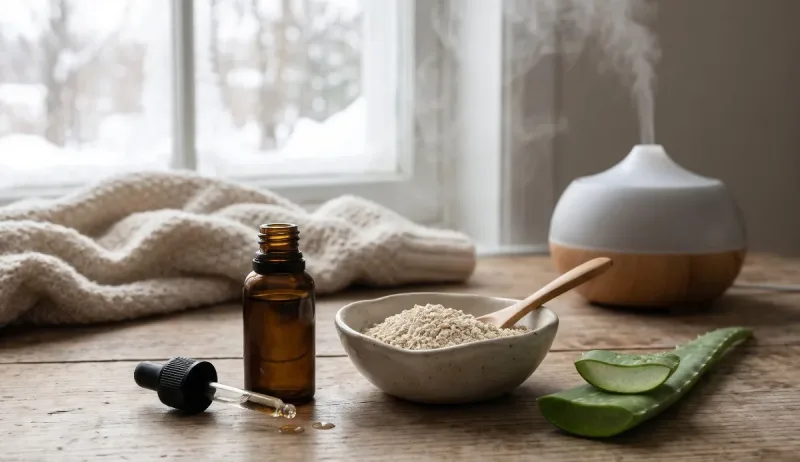
When cold air arrives, humidity drops, and indoor radiators switch on, the skin is usually the first organ to register the shift. Tightness turns into rough flaking, which quickly spirals into an unrelenting, prickling winter itch. For many, the instinct is to grab a tub of thick, occlusive body butter or rich cream. But heavy lotions can feel suffocating, leave greasy residues on clothing, clog pores, or trigger contact sensitivity when formulated with synthetic emulsifiers and fragrances.
Stopping the winter itch naturally does not require smothering your skin in greasy salves. By understanding how the stratum corneum—the outermost protective shield of your epidermis—functions, you can restore moisture balance, quench inflammation, and shut down the itch-scratch cycle using lightweight, non-greasy habits and clean botanical ingredients.
Why Winter Skin Itches: Understanding the "Winter Itch" (Asteatosis)
The medical term for cold-weather dry skin is asteatosis or xerosis cutis. During temperate months, your sebaceous glands produce an optimal lipid matrix—composed of ceramides, cholesterol, and free fatty acids—that locks hydration inside the skin and keeps irritants out.
Winter disrupts this equilibrium in three specific ways:
-
Transepidermal Water Loss (TEWL): Frigid outdoor air holds almost zero ambient moisture, while indoor heaters create a parched environment. This moisture gradient actively draws water out through the epidermis into the surrounding air.
-
Reduced Natural Sebum Production: Blood vessels constrict in cold conditions to preserve internal core temperature (vasoconstriction), slowing metabolic turnover and natural sebum excretion.
-
Microscopic Barrier Cracks: Without adequate hydration, corneocytes (skin surface cells) shrink, curl at the edges, and detach prematurely. This creates micro-fissures in the barrier, exposing sensitive dermal nerve fibers to airborne particles, soap residues, and fabric friction, which fire an immediate "itch" response to the brain.
Heavy lotions attempt to glue these cracked cells down with heavy waxes and mineral oils. However, you can achieve superior barrier repair and instant relief using lightweight, biocompatible alternatives.
9 Natural Strategies to Relieve Winter Itching (Grease-Free)
1. The 3-Minute "Soak and Seal" with Plant-Derived Squalane
Squalene is a natural component of human sebum, but natural production starts dropping after early adulthood. Plant-derived squalane (sourced from sugarcane or olives) is a fully saturated, stable oil that mimics your natural sebum profile.
Unlike heavy mineral oil or unrefined coconut oil, squalane has a featherlight, dry-touch consistency that sinks into dermal layers within seconds without leaving a greasy sheen.
-
How to do it: Finish your shower, pat your skin lightly so it remains damp, and immediately apply 4–6 drops of pure squalane over your limbs.
-
The mechanism: Squalane functions as a biomimetic emollient. Applying it to damp skin traps residual water molecules against the epidermis, lowering TEWL without occluding pores or coating bedsheets.
2. Colloidal Oatmeal Soaks to Quiet Pruritus
Colloidal oatmeal is not regular ground porridge; it consists of whole oat grains ground into an ultra-fine, dispersible powder containing high concentrations of beta-glucans, lipids, and specialized anti-inflammatory polyphenols called avenanthramides.
Avenanthramides actively inhibit the release of pro-inflammatory cytokines and histamine, cooling down the nervous system's itch reflex directly on contact.
-
How to prepare: Grind whole raw oats in a high-speed blender until they dissolve smoothly into a milky suspension in water. Add 1 cup of this powder directly into a lukewarm bath.
-
Duration: Soak for 12 to 15 minutes. Step out, avoid harsh scrubbing, and gently pat dry with a soft cotton towel.
| Relief Method | Target Mechanism | Texture / Feel | Best Time to Apply |
| Plant Squalane | Lipid replacement & TEWL reduction | Weightless, dry oil finish | Immediately out of shower |
| Colloidal Oatmeal | Calms histamine & cytokine release | Silky, soothing soak | Evening or peak itch flair |
| Jojoba / Aloe Gel Blend | Deep hydration + humectant binding | Cool, fast-absorbing fluid | Morning and midday |
| Borage / Evening Primrose | Cellular GLA deficiency correction | Light, delicate oil | Bedtime |
3. Blend Pure Aloe Vera with Jojoba Oil for Weightless Emulsion
If standard lotions feel suffocating, formulate an instantaneous, two-second botanical emulsion in the palm of your hand.
Aloe vera contains polysaccharide humectants that bind water molecules deep within tissue layers. Jojoba oil is technically a liquid plant wax ester that chemically mirrors the structure of human sebum.
-
Mix two pumps of 99% pure, alcohol-free aloe vera gel with 3–4 drops of cold-pressed jojoba oil in your hands.
-
Rub your palms together to form a light, cloudy emulsion and smooth it over your arms, legs, or torso.
-
The aloe pulls water into the stratum corneum, while the jojoba esters seal micro-cracks without an oily or sticky film.
4. Optimize Water Temperature and Drop Harsh Surfactants
One of the most common causes of winter asteatosis is the hot shower. While standing under steaming water feels comforting against cold skin, water above 105°F (40°C) dissolves the natural lipid barrier instantly, much like hot water cuts grease on dishes. When you exit a hot shower, rapid surface evaporation triggers severe rebound itching.
-
Lower the heat: Keep bath and shower water warm or tepid, never steaming.
-
Switch surfactants: Eliminate bar soaps and foaming gels containing Sodium Lauryl Sulfate (SLS) or Sodium Laureth Sulfate (SLES). These harsh anionic detergents strip intercellular lipids.
-
Target clean: Use fragrance-free, syndet (synthetic detergent) bars or non-foaming cleansing washes, and only lather areas with high sweat-gland density (underarms, groin, feet), leaving the rest of the body to rinse cleanly with plain water.
5. High-GLA Botanical Oils (Borage and Evening Primrose)
Gamma-linolenic acid (GLA) is an essential omega-6 fatty acid critical for maintaining cell membrane permeability and inflammation control. Dry, itchy skin frequently shows a localized deficiency in delta-6-desaturase, an enzyme required to synthesize GLA.
Cold-pressed borage seed oil (containing roughly 20–24% GLA) and evening primrose oil (8–10% GLA) deliver essential fatty acids directly to compromised cell walls:
-
They absorb quickly into the epidermal layers.
-
They suppress inflammatory leukotrienes, relieving burning, itchy patches on shins, forearms, and flanks.
-
Smooth 3–5 drops over problem spots before bedtime.
6. Introduce Ultrasonic Cool-Mist Humidification
Treating winter itch from the outside in requires addressing the air surrounding your body. Forced-air indoor heating systems regularly pull indoor relative humidity (RH) down below 20%—dryer than the Sahara Desert.
At an ambient RH under 40%, water continuously evaporates from your skin regardless of topical treatments.
-
Place a cool-mist ultrasonic humidifier in rooms where you spend the most time, particularly the bedroom.
-
Aim for a baseline indoor relative humidity between 40% and 50%.
-
Keep doors partially closed to maintain humidity levels, and clean the water reservoir every two days to prevent bacterial and mold accumulation.
7. Choose Breathable, Friction-Free Natural Fabrics
The winter itch is heavily aggravated by mechanical irritation. Coarse wool fibers, synthetic acrylic sweaters, and polyester thermal base layers generate electrostatic friction and possess microscopic barbs that snag flaking skin cells, triggering local histamine release.
-
Wear 100% long-staple organic cotton, bamboo viscose, or silk as your base layer directly against your skin.
-
If you want to wear wool for warmth, always wear a smooth, long-sleeve cotton garment underneath so the wool never makes direct contact with sensitive dermal areas.
-
Wash clothing in fragrance-free, dye-free hypoallergenic detergents, and skip fabric softeners, which leave chemical residues on cloth fibers that rub into compromised winter skin.
8. Feed the Lipid Barrier Internally (Dietary Lipids and Hydration)
Skin hydration begins systemically. During cold weather, the body's thirst sensation drops by up to 40%, leading many to inadvertently drink far less water than in summer.
-
Systemic Hydration: Sip warm herbal teas (chamomile, rooibos, or peppermint) and filtered water steadily throughout the day.
-
Omega-3 Fatty Acids: Incorporate wild-caught fatty fish (sardines, salmon, mackerel), ground flaxseeds, chia seeds, and walnuts into meals. Omega-3 fatty acids (EPA and DHA) reinforce cellular lipid membranes across every layer of the skin, dampening systemic inflammatory pathways that exacerbate pruritus.
9. Cool Compress Therapy to Block the Itch Reflex
Scratching an itch provides momentary psychological relief by sending a mild pain signal to the brain, which briefly distracts from the itch sensation. However, this action releases more inflammatory markers, damages delicate corneocytes, and creates an itch-scratch feedback loop that can lead to infection.
When a sudden flare occurs:
-
Dampen a soft cotton washcloth with ice-cold chamomile tea or cold filtered water.
-
Press the compress gently against the itching area for 5 to 10 minutes.
-
The cold temperature constricts local blood vessels and desensitizes peripheral sensory nerves (C-fibers), turning off the itch signal without abrasion or greasy creams.
Daily Routine for Itch-Free Winter Skin
-
Morning:
-
Cleanse only face and key areas with a gentle, non-foaming wash.
-
Apply a palm blend of aloe vera gel and 3 drops of jojoba oil across exposed arms and legs.
-
Wear breathable cotton undergarments beneath outer winter layers.
-
-
Throughout the Day:
-
Maintain indoor humidity between 40% and 50% using a desk or home humidifier.
-
Drink warm water or herbal teas regularly.
-
Avoid dry friction from rough synthetics.
-
-
Evening:
-
Take a short (5–8 minute), lukewarm shower.
-
While skin is damp, press 4–6 drops of squalane or borage oil onto irritated areas.
-
Run a bedroom humidifier through the night to prevent nocturnal itching and sleep disruption.
-
Medical Disclaimer:The information provided in this article is for educational and informational purposes only and is not intended as medical advice, diagnosis, or treatment. Always consult a qualified healthcare professional or board-certified dermatologist before introducing new topical treatments, especially if you have chronic skin conditions such as eczema, psoriasis, severe dermatitis, or open, broken, or infected skin.


Comments
No comments yet. Be the first to ask a question or share an update.
Leave a comment
Your mobile number is never published. Comments appear after review. Website links, email addresses and code are not allowed.