
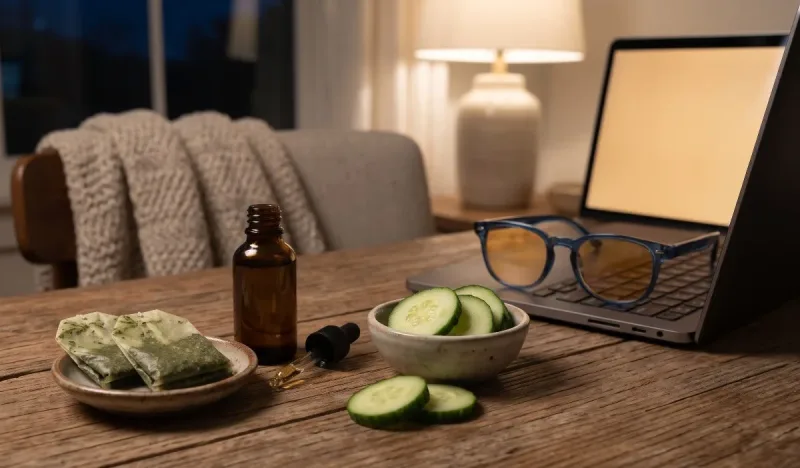
For many of us, the day doesn't end when the sun goes down—it simply transitions to a smaller screen. Whether you are catching up on late-night work, studying, or scrolling through your feeds, spending hours staring at digital displays in the dark can take a heavy toll on your appearance. The most visible consequence is often the stubborn, shadowed bags that appear under your eyes the next morning.
These aren't just signs of general tiredness. Dark circles caused by late-night screen fatigue are a specific physiological reaction to artificial light, visual strain, and disrupted sleep patterns. Fortunately, you can counter these effects. This guide will explain why digital fatigue causes under-eye shadows and provide scientifically backed, natural, and practical ways to restore and brighten your eyes at home.
The Science of Screen Fatigue: Why Late-Night Devices Cause Dark Circles
To effectively address under-eye shadows, it helps to understand what is happening beneath the skin when you use screens late at night. The skin around your eyes is the thinnest on your entire body—measuring just 0.5mm thick, compared to about 2mm elsewhere. This makes it highly sensitive to changes in blood flow, hydration, and muscle strain.
Late-night screen use causes dark circles through three main mechanisms:
-
Digital Eye Strain (Computer Vision Syndrome): Staring at a screen requires your ciliary and extraocular muscles to work continuously to focus on pixelated text and moving images. This constant effort increases blood flow to the eyes, causing the tiny capillaries under the eyes to expand (vasodilation) and pool with blood, which shows through the thin skin as dark, bluish-purple shadows.
-
Blue Light and Melatonin Suppression: Digital screens emit high-energy visible (HEV) blue light, which tricks your brain into thinking it is still daytime. This suppresses the production of melatonin, the hormone that signals your body to sleep. When you finally sleep, the quality is often poor, which prevents your lymphatic system from draining fluids and leads to puffy, shadowed eyes.
-
Reduced Blink Rate and Dryness: We blink about 66% less when looking at screens. This lack of blinking dries out the eyes, causing irritation and inflammation. The natural response is to rub them, which can rupture the delicate capillaries beneath the skin, causing blood to leak and create hyperpigmentation.
9 Natural Strategies to Tackle Screen-Induced Dark Circles
1. The 10-Minute Caffeine & Antioxidant Compress
When you wake up with dark, puffy eyes, your first goal should be to restrict dilated blood vessels and encourage fluid drainage. Caffeine is a natural vasoconstrictor, meaning it temporarily tightens blood vessels and reduces swelling.
-
How to do it: Steep two bags of caffeinated green or black tea in hot water for 3 to 5 minutes. Take them out and place them in the refrigerator to cool for 10 to 15 minutes.
-
The Application: Lie down and place the chilled, damp tea bags over your closed eyes for 10 minutes.
-
Why it works: The combination of cold temperature and caffeine quickly constricts blood vessels, while the tea’s natural antioxidants (polyphenols) help soothe inflammation.
2. The 20-20-20 Rule to Ease Visual Strain
The most effective way to prevent dark circles from late-night screen use is to reduce the strain on your eyes while you work or watch.
-
How to do it: Every 20 minutes, take a break from your screen to look at an object at least 20 feet away for at least 20 seconds.
-
The Benefit: This simple practice allows your focusing muscles to relax, which lowers blood flow to the area and prevents the pooling that leads to dark shadows.
| Relief Method | Target Mechanism | Key Action | Best Time to Apply |
| Chilled Tea Bags | Caffeine & Cold | Constricts blood vessels & reduces swelling | Morning (immediately after waking) |
| Sweet Almond Oil | Natural Emollient & Vitamin E | Brightens skin & improves moisture | Night (before bed) |
| 20-20-20 Rule | Behavioral | Relaxes eye muscles & lowers strain | During screen use |
| Cold Spoon Press | Temperature-based | Quickly reduces puffiness and pooling | Morning |
3. Gentle Lymphatic Massage with Sweet Almond Oil
Sweet almond oil is rich in Vitamin E, Vitamin K, and natural fatty acids that help lighten skin over time and improve the strength of blood vessels. When paired with a gentle massage, it helps clear away pooled fluids.
-
How to do it: Before bed, apply 1 or 2 drops of sweet almond oil to your ring fingers (which exert the least pressure).
-
The Technique: Gently tap the oil around your orbital bone, starting from the inner corner and moving outward. Avoid pulling or rubbing the skin.
-
The Benefit: This encourages lymphatic drainage, reducing the fluid buildup that can make dark circles look more prominent.
4. Hydrate to Counter Digital Dehydration
Staring at screens in dry, heated, or air-conditioned indoor spaces can dehydrate your skin. Dehydrated skin looks thin, pale, and sunken, which makes the dark blood vessels beneath it even more visible.
-
The Fix: Drink plenty of water throughout the evening to keep your skin hydrated and plump.
-
Pro Tip: Keep a glass or bottle of water at your desk or bedside as a reminder to drink regularly while using your devices.
5. Elevate Your Head While You Sleep
If you stay up late, you are more likely to experience fluid retention under your eyes by morning, especially if you sleep flat on your back.
-
How to do it: Prop yourself up with an extra pillow to keep your head elevated above your heart.
-
Why it works: This uses gravity to prevent fluid from pooling under your eyes overnight, reducing both puffiness and the dark shadows that accompany it.
6. Adjust Your Screen Settings and Use Night Mode
To minimize the impact of blue light on your eyes and your sleep, make your devices as eye-friendly as possible.
-
The Solution: Turn on "Night Shift" or "Dark Mode" on your phone, tablet, and computer. This shifts your screen’s colors to the warmer end of the spectrum, reducing blue light.
-
Brightness: Adjust your screen’s brightness to match the natural light in your room. Staring at a bright screen in a dark room forces your eyes to work much harder, worsening eye strain.
7. Try a Chilled Cucumber or Potato Slice Compress
Both cucumbers and potatoes contain natural skin-soothing and brightening properties that can help refresh tired eyes.
-
Why it works: Cucumbers are highly hydrating and contain Vitamin C and caffeic acid, which help reduce swelling. Potatoes contain catecholase, an enzyme with natural skin-lightening properties that can help fade dark shadows over time.
-
How to do it: Slice a chilled cucumber or raw potato and place the slices over your eyes for 10 to 15 minutes.
8. Use High-Quality Blue Light Blocking Glasses
If your late-night screen time is unavoidable due to work or study, blue light blocking glasses can be a helpful tool.
-
What they do: These glasses are designed with lenses that filter out a portion of the high-energy blue light emitted by digital screens.
-
The Benefit: By reducing blue light exposure, they can help lower digital eye strain, lessen the demand on your eye muscles, and make it easier to fall asleep afterward.
9. Avoid Rubbing Your Eyes
When your eyes get tired and dry from staring at a screen, it is natural to want to rub them. However, this is one of the worst things you can do for dark circles.
-
The Problem: The tiny blood vessels under your eyes are very fragile. Rubbing can cause them to break and leak tiny amounts of blood, which can lead to long-lasting dark, shadowy patches.
-
The Alternative: If your eyes feel dry or tired, use natural, preservative-free artificial tears to soothe them instead of rubbing.
Simple Daily Routine to Prevent and Faint Screen-Induced Shadows
-
During Screen Use:
-
Turn on night mode and match your screen brightness to the room.
-
Wear blue light blocking glasses if using devices late at night.
-
Follow the 20-20-20 rule to give your eye muscles a break.
-
Keep a bottle of water nearby and take regular sips.
-
-
Before Bed:
-
Power down devices at least 30 to 60 minutes before you sleep, if possible.
-
Gently tap a drop of sweet almond oil around your orbital bone.
-
Sleep with your head slightly elevated using an extra pillow.
-
-
In the Morning:
-
Apply a chilled caffeinated tea bag or cold spoon compress for 10 minutes to reduce puffiness.
-
Rinse your face with cool water to stimulate natural circulation.
-
Medical Disclaimer:The information in this article is for educational purposes only and should not be taken as medical advice, diagnosis, or treatment. Always consult a healthcare professional or dermatologist if you experience persistent eye pain, vision changes, or if your dark circles do not improve with natural care, as they could be linked to an underlying medical condition.




Comments
No comments yet. Be the first to ask a question or share an update.
Leave a comment
Your mobile number is never published. Comments appear after review. Website links, email addresses and code are not allowed.