
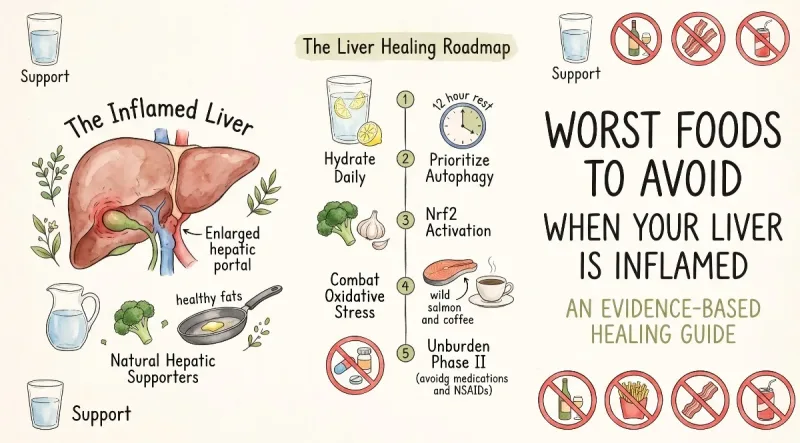
The liver is your body's ultimate metabolic engine and detoxification powerhouse, responsible for processing nutrients, filtering toxins from the blood, synthesizing vital proteins, and regulating bile production. When the liver becomes inflamed—a condition known clinically as hepatitis, whether triggered by non-alcoholic fatty liver disease (NAFLD/MASLD), viral infections, autoimmune conditions, or toxic overload—its hepatocyte cells experience oxidative stress, swelling, and impaired functionality. In this vulnerable state, every food and beverage you consume directly dictates whether your liver enters a regenerative healing pathway or spirals toward progressive scarring (fibrosis) and permanent tissue damage (cirrhosis).
The worst foods to avoid when your liver is inflamed are highly refined sugars (especially high-fructose corn syrup), saturated and trans fats found in deep-fried foods, ultra-processed red and cured meats, sodium-heavy convenience meals, alcohol, and refined white carbohydrates. These dietary elements drive de novo lipogenesis (fat accumulation inside liver cells), trigger systemic oxidative stress, disrupt mitochondrial respiration, and spike inflammatory cytokines, actively preventing inflamed hepatic tissues from self-repairing.
Understanding the specific physiological mechanisms behind why certain foods overburden the hepatic portal system is essential for your recovery. Below is an exhaustive, science-backed nutritional guide outlining the critical foods to eliminate, how to substitute them with anti-inflammatory alternatives, and practical lifestyle habits to help soothe and restore an inflamed liver.
What Happens to the Liver During Acute and Chronic Inflammation?
To understand why specific foods are detrimental, it is critical to look at the cellular dynamics of hepatic inflammation:
-
Hepatocyte Swelling and Ballooning: When liver cells become overwhelmed by excess fatty acids, reactive oxygen species (ROS), or viral toxins, they become physically engorged. This ballooning impairs their ability to transport bile and process metabolic waste.
-
Kupffer Cell Activation: The resident immune cells in the liver, known as Kupffer cells, interpret metabolic overload (such as surges of free fatty acids and endotoxins from the gut) as an attack. They respond by releasing potent pro-inflammatory signaling proteins, including Tumor Necrosis Factor-alpha (TNF-α) and Interleukin-6 (IL-6).
-
Hepatic Stellate Cell Activation: Continued dietary stress causes quiescent hepatic stellate cells to transform into myofibroblasts. These cells deposit dense collagen matrices across liver tissues, which leads directly from inflammation to permanent fibrotic scarring.
-
Mitochondrial Dysfunction: Overfeeding liver cells with refined sugars and damaged fats impairs the cellular powerhouses (mitochondria), generating continuous free-radical damage that kills healthy liver tissue.
Eliminating high-risk foods removes the constant influx of metabolic fuel that feeds this inflammatory cascade, giving hepatocytes the metabolic breathing room required to regenerate.
7 Worst Foods to Avoid When Your Liver Is Inflamed
Removing these damaging foods is the most impactful step you can take to alleviate hepatic stress.
1. High-Fructose Corn Syrup and Refined Sugars
Refined sugar—specifically dietary fructose found in soda, sweetened teas, commercial juices, candy, baked goods, and processed condiments—is the leading dietary driver of hepatic steatosis and inflammation.
-
De Novo Lipogenesis: Unlike glucose, which nearly every cell in the human body can utilize for energy, dietary fructose can only be metabolized by hepatocytes in the liver. When an inflamed liver receives a concentrated surge of liquid fructose, it cannot burn it as energy. Instead, it converts fructose directly into triglycerides through a pathway called de novo lipogenesis.
-
Uric Acid Production and Endoplasmic Reticulum (ER) Stress: The rapid phosphorylation of fructose in liver cells depletes cellular ATP, triggering spikes in uric acid. High intracellular uric acid induces endoplasmic reticulum stress and stimulates hepatic inflammation.
-
What to Cut: Standard carbonated sodas, sweetened iced teas, fruit cocktails, store-bought pancake syrups, commercial barbecue sauces, ketchup, pastries, and packaged granola bars.
2. Deep-Fried Foods and Industrial Trans Fats
Fried foods—including french fries, fried chicken, donuts, and battered appetizers—are doubly destructive to an already irritated liver.
-
Thermal Degradation of Oils: Deep-frying involves repeatedly heating vegetable and seed oils to high temperatures. This thermal breakdown creates toxic lipid peroxides, acrolein, and polar compounds that directly damage hepatocyte cell membranes.
-
Oxidative Overload: Industrial trans-fatty acids and oxidized polyunsaturated fats impair the liver’s natural antioxidant defenses (such as intracellular glutathione), making liver cells significantly more vulnerable to necrosis and apoptosis.
-
What to Cut: Fast-food french fries, commercial fried snacks, potato chips, corn chips, deep-fried carnival foods, and any processed baked goods containing "partially hydrogenated oils."
3. Processed and Cured Red Meats
Processed deli meats, sausages, hot dogs, bacon, and high-fat cuts of beef are major contributors to systemic and hepatic inflammation.
-
Advanced Glycation End-Products (AGEs): Cured and high-temperature-processed meats contain elevated levels of AGEs. When absorbed, AGEs bind to specific receptors (RAGE) on hepatic stellate cells, directly triggering inflammatory signaling pathways and accelerating tissue fibrosis.
-
Heme Iron Overload: Red meat is rich in heme iron. While iron is an essential nutrient, an inflamed liver struggles to regulate iron balance. Excess free iron accumulates in liver parenchyma, catalyzing the Fenton reaction—a chemical process that generates hydroxyl free radicals, accelerating tissue damage.
-
Sodium Nitrites and Preservatives: Preservatives added to deli meats break down into nitrosamines, which place additional detoxification strain on an already struggling liver.
-
What to Cut: Bacon, pork sausage, salami, pepperoni, hot dogs, canned corned beef, bologna, and marbled fatty cuts of beef or pork.
4. Alcohol in Any Amount
For an inflamed liver, there is no "safe" or moderate threshold of alcohol consumption. Whether the original inflammation was caused by alcohol, a virus, or metabolic syndrome, alcohol must be eliminated entirely.
-
Toxic Acetaldehyde Production: When the liver metabolizes ethanol via the alcohol dehydrogenase enzyme, it produces acetaldehyde—a direct cellular toxin and carcinogen. Acetaldehyde binds to cellular proteins, damages DNA, and causes immediate hepatocyte membrane breakdown.
-
Bacterial Endotoxin Translocation: Alcohol increases intestinal permeability ("leaky gut"). This allows lipopolysaccharide (LPS) bacterial endotoxins from the intestine to flood through the portal vein directly into the liver, stimulating Kupffer cells to unleash massive waves of inflammatory cytokines.
-
Immediate Halting of Fat Burning: The liver prioritizes alcohol clearance above all else. While clearing alcohol, the liver completely halts fatty acid oxidation, ensuring that fat accumulates inside liver cells.
-
What to Cut: Beer, red and white wine, hard liquors, spirits, hard seltzers, and alcohol-infused cooking liquids.
5. High-Sodium Canned and Packaged Foods
Excessive dietary sodium acts as an invisible saboteur of liver and vascular health.
-
Cellular Osmotic Stress and Edema: In patients with moderate-to-severe liver inflammation, the body’s renin-angiotensin-aldosterone system (RAAS) becomes dysregulated. High sodium intake leads to severe water retention, expanding plasma volume and exacerbating portal hypertension (high blood pressure within the portal vein system). In advanced cases, this leads to abdominal fluid accumulation (ascites) and lower leg swelling (edema).
-
Endothelial Dysfunction: Excess sodium drives endothelial stiffness in liver microvessels, restricting optimal microcirculation needed for tissue oxygenation and repair.
-
What to Cut: Canned condensed soups, instant noodle packets, frozen microwave TV dinners, heavily salted pretzels, chips, soy sauce, and processed seasoning mixes.
6. Refined Carbohydrates and White Flour
Refined grain products lack fiber, vitamins, and minerals, functioning essentially like simple sugars once digested.
-
Insulin Resistance and Hepatic Fat Delivery: Refined white bread, white pasta, pizza dough, and white bagels have a high glycemic index. They cause rapid spikes in postprandial blood glucose, prompting huge surges of insulin. Elevated insulin stimulates sterol regulatory element-binding protein 1c (SREBP-1c) in the liver, which switches on the genetic machinery that creates new fat deposits inside hepatocytes.
-
Sustained Systemic Inflammation: High-glycemic diets correlate strongly with higher levels of C-reactive protein (CRP), keeping the liver in a chronic state of low-grade immune activation.
-
What to Cut: White sandwich bread, standard refined flour pasta, flour tortillas, white crackers, commercial pizza crusts, and refined white rice in large portions.
7. Artificial Sweeteners and Chemical Food Additives
While non-caloric artificial sweeteners are often marketed as healthy sugar alternatives, their impact on the liver microbiome is concerning.
-
Gut Microbiota Dysbiosis: High intake of synthetic sweeteners (such as aspartame, sucralose, and saccharin) has been shown in clinical and animal studies to alter the composition of the intestinal microbiome. Dysbiosis increases intestinal permeability, allowing inflammatory metabolites to reach the liver via the portal vein.
-
Detoxification Burden: Chemical flavorings, artificial color dyes, and emulsifiers must be cleared by Phase I and Phase II cytochrome P450 enzyme pathways in the liver, draining vital stores of cellular antioxidants like glutathione.
-
What to Cut: Diet sodas, sugar-free energy drinks, zero-calorie "diet" desserts, and foods packed with artificial food colorings and chemical emulsifiers.
Liver-Healing Alternatives: What to Eat Instead
Restoring liver health is not merely about restriction; it is about supplying the micronutrients and antioxidants required for tissue regeneration.
-
Cruciferous Vegetables: Broccoli, Brussels sprouts, cabbage, and kale are rich in glucoraphanin, which converts into sulforaphane. Sulforaphane activates the Nrf2 pathway, triggering the body’s most powerful internal antioxidant and detoxification enzymes.
-
Extra-Virgin Olive Oil (EVOO): EVOO is packed with oleic acid and oleocanthal, natural compounds with potent anti-inflammatory properties that have been shown to improve liver enzymes and reduce hepatic fat storage.
-
Fatty Cold-Water Fish: Wild-caught salmon, sardines, and mackerel deliver bioavailable omega-3 fatty acids (EPA and DHA). Omega-3s lower hepatic triglyceride accumulation, downregulate inflammatory leukotrienes, and increase insulin sensitivity.
-
Unsweetened Black Coffee: Moderate coffee consumption (2 to 3 cups daily) is one of the most consistently validated hepatoprotective habits. Coffee increases levels of liver glutathione and produces paraxanthine, which actively slows the production of connective scar tissue by hepatic stellate cells.
-
Garlic and Alliums: Garlic contains allicin and sulfur compounds that support Phase II liver clearance while helping to reduce hepatic lipid levels.
4 Lifestyle Strategies to Soothe Hepatic Inflammation
Pairing dietary modifications with these evidence-based lifestyle changes accelerates the resolution of liver inflammation:
-
Adopt a 12-Hour Overnight Digestive Fast: Allow your digestive system complete rest for 12 hours every evening (e.g., finishing dinner at 7:00 PM and eating breakfast at 7:00 AM). Fasting depletes liver glycogen, prompting the liver to activate autophagy—the natural cellular cleaning process that clears out damaged proteins, dysfunctional mitochondria, and excess fat droplets from liver cells.
-
Engage in Regular Low-Impact Aerobic Movement: Engaging in 30 minutes of brisk walking, cycling, or swimming 4 to 5 days a week increases peripheral insulin sensitivity in skeletal muscle. This reduces the stream of excess glucose and free fatty acids flooding the liver, directly lowering liver enzymes (ALT and AST).
-
Review All Medications and Supplements: The liver must metabolize every pharmaceutical and supplement you take. Common over-the-counter medications—particularly acetaminophen (paracetamol) and nonsteroidal anti-inflammatory drugs (NSAIDs)—can cause acute hepatocyte injury, especially if taken in excess or combined with alcohol. Always have your physician review your full medication list.
-
Hydrate Deeply with Plain Filtered Water: Drinking 2 to 3 liters of filtered water daily supports optimal blood volume, thins bile secretions, and ensures your kidneys can efficiently clear metabolic byproducts that the liver has made water-soluble.
When to Seek Immediate Medical Care for Liver Symptoms
Mild liver inflammation can be silent for years, often discovered only through routine blood panels showing elevated ALT, AST, or GGT levels. However, acute or severe liver inflammation can rapidly impair organ function, requiring immediate clinical intervention.
Seek emergency medical evaluation if you develop:
-
Jaundice: Noticeable yellowing of the skin or the whites of the eyes (sclera).
-
Dark Urine and Pale Stools: Urine that appears the color of black tea or cola, accompanied by clay-colored or chalky bowel movements.
-
Severe Abdominal Swelling (Ascites): Rapid, unexplained distension or fluid buildup in the abdomen, or sudden severe swelling in the lower legs and ankles.
-
Right Upper Quadrant Pain: Persistent, dull, or sharp pain underneath the right lower rib cage that worsens over time.
-
Hepatic Encephalopathy Signs: New-onset confusion, severe brain fog, slurred speech, marked memory lapses, or excessive daytime sleepiness.
-
Gastrointestinal Bleeding: Vomiting blood, dark coffee-ground emesis, or passing black, tarry, foul-smelling stools (melena).




Comments
No comments yet. Be the first to ask a question or share an update.
Leave a comment
Your mobile number is never published. Comments appear after review. Website links, email addresses and code are not allowed.