
The mid-afternoon slump hits almost every office worker with predictable precision. Around 3:00 PM, brain fog creeps in, focus drifts, and physical stamina plummets. In a busy workplace environment, the immediate temptation is to walk over to the breakroom or office vending machine for a quick boost. Unfortunately, commercial office snacks—granola bars, pretzels, potato chips, flavored lattes, and cookies—are packed with refined flours and simple sugars. For someone diagnosed with prediabetes, reaching for these ultra-processed options causes rapid, damaging spikes in postprandial blood sugar, followed by steep insulin surges and energy crashes that leave you hungrier and more fatigued than before.
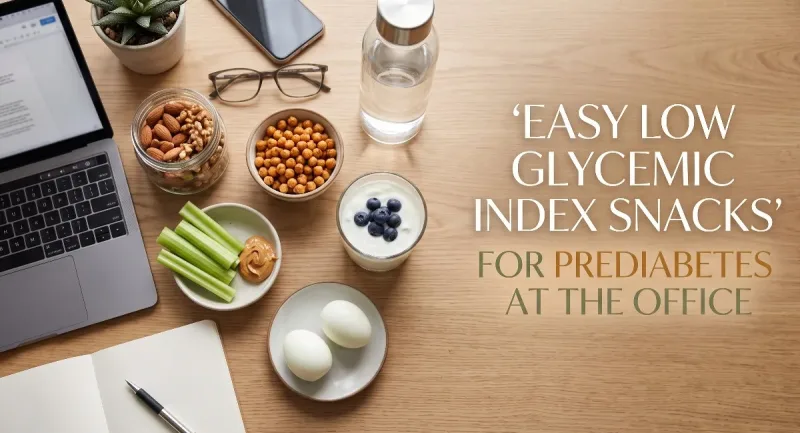
Managing prediabetes does not mean starving through eight hours at a desk or relying on tasteless diet foods. The most practical easy low glycemic index snacks for prediabetes at the office pair dietary fiber, lean protein, and cardioprotective healthy fats to blunt blood glucose spikes and sustain steady cognitive focus. Foundational office-friendly choices include raw almonds and walnuts, crunchy roasted chickpeas, string cheese paired with crisp baby carrots, single-serve unsweetened Greek yogurt cups, individual hummus cups with cucumber slices, hard-boiled eggs, and natural peanut butter with celery sticks.
Equipping your desk drawer and workplace breakroom fridge with low glycemic index (GI) staples protects your pancreas, improves insulin sensitivity, and prevents prediabetes from progressing to type 2 diabetes. Below is an exhaustive nutritional guide examining the science of the glycemic index, workplace blood sugar management, the best desk-stable and refrigerated snack options, and daily habits to keep your glucose steady throughout the workday.
The Physiology of Prediabetes: Why Office Snacking Matters
Prediabetes is characterized by impaired fasting glucose (100 to 125 mg/dL) or an elevated hemoglobin A1c (5.7% to 6.4%). At this stage, your muscle, fat, and liver cells have become resistant to insulin, the peptide hormone secreted by pancreatic beta cells to escort glucose out of circulation and into cells for energy.
When you sit at an office desk for hours, your skeletal muscle contractions are minimal. Because contracting muscles are your body's primary non-insulin-dependent glucose sponges, physical inactivity leaves your system vulnerable to persistent hyperglycemia.
Consuming a high-glycemic office snack—such as a white-flour bagel, sweetened pastry, or bag of potato chips—sets off a metabolic chain reaction:
-
Rapid Intestinal Hydrolysis: High-GI carbohydrates break down into free glucose molecules within minutes of ingestion.
-
Glucose Surges: A rapid influx of glucose enters the bloodstream through the portal vein, overwhelming resistant cellular receptors.
-
Compensatory Hyperinsulinemia: The pancreas responds by pumping out massive surges of insulin to force blood sugar down.
-
The Reactive Hypoglycemic Crash: Elevated insulin clears glucose too aggressively, dropping blood sugar sharply below baseline. This sudden drop triggers cortisol and adrenaline release, causing shakiness, irritability ("hanger"), severe mental fatigue, and urgent cravings for more carbohydrates.
-
Pancreatic Beta-Cell Exhaustion: Over time, these repeated daily spikes and crashes wear down pancreatic beta cells, accelerating the progression toward type 2 diabetes.
Choosing low-glycemic foods (GI values under 55) ensures that carbohydrates are broken down slowly into the bloodstream. This provides steady glucose delivery, supports clean mitochondrial energy production, and keeps you full until your workday ends.
Glycemic Index (GI) vs. Glycemic Load (GL): The Desk-Worker's Metric
When selecting desk snacks, understanding the difference between Glycemic Index and Glycemic Load is essential:
-
Glycemic Index (GI): Rates carbohydrates on a scale of 0 to 100 based on how fast and high they spike blood sugar compared to pure glucose (which scores 100). Low GI foods score 55 or less, medium GI foods range from 56 to 69, and high GI foods score 70 or above.
-
Glycemic Load (GL): Factors in both how rapidly the carbohydrate turns to sugar (GI) and the total volume of carbohydrates in a realistic, standard serving size. The mathematical formula is:
A food can have a moderate GI, but if its carbohydrate volume per realistic serving is small (such as watermelon or strawberries), its overall glycemic impact (GL) on your bloodstream is minimal. For optimal office blood sugar stability, aim for desk snacks with a low GI ($\le 55$) and a low GL ($\le 10$).
4 Desk-Stable Snacks That Require No Refrigeration
If your office lacks a clean communal refrigerator, or you want quick sustenance within arm's reach of your keyboard, these shelf-stable staples stay fresh in your desk drawer for weeks:
1. Raw or Dry-Roasted Mixed Tree Nuts (Almonds, Walnuts, and Pecans)
Raw tree nuts are the gold standard for shelf-stable workplace nutrition.
-
Glycemic Profile: Raw almonds have a Glycemic Index of 0 to 15, representing virtually zero direct blood sugar impact.
-
Nutritional Mechanism: Tree nuts are loaded with monounsaturated fatty acids (MUFAs), plant-based protein, and insoluble fiber. Walnuts supply alpha-linolenic acid (ALA), an anti-inflammatory plant omega-3 fat that enhances cellular membrane fluidity and insulin receptor sensitivity. Almonds deliver concentrated magnesium, a vital mineral cofactor needed for normal glucose metabolism that is frequently depleted in individuals with prediabetes.
-
Office Serving: Keep a glass jar of raw almonds and walnuts in your bottom desk drawer. Portion out a modest handful (roughly 28 to 30 grams, or 20 to 24 almonds). Avoid honey-roasted, glazed, or candied varieties, which add hidden refined sucrose.
2. Crunchy Roasted Chickpeas (Garbanzo Beans)
If you crave the salty, crispy bite of potato chips or pretzels, seasoned roasted chickpeas are the ideal metabolic replacement.
-
Glycemic Profile: Chickpeas carry a low GI of approximately 28 to 32.
-
Nutritional Mechanism: Unlike potato starch, which hydrolyzes into glucose in the mouth, chickpeas contain dense networks of amylose starch combined with soluble resistant starch and oligosaccharides. These fibers resist rapid upper-gut breakdown and travel to the large intestine, where healthy gut bacteria ferment them into short-chain fatty acids (SCFAs) like butyrate, which directly improves systemic insulin sensitivity.
-
Office Serving: Keep single-serve 1-ounce (30g) bags in your desk. Choose varieties roasted in extra-virgin olive oil or avocado oil and seasoned with sea salt, smoked paprika, or rosemary.
3. Pumpkin Seeds (Pepitas) and Sunflower Seeds
Seeds are an allergy-friendly alternative to nuts that hold up well in warm office conditions.
-
Glycemic Profile: Pumpkin seeds score under 15 on the Glycemic Index.
-
Nutritional Mechanism: Pepitas provide an exceptional ratio of plant protein (around 7 grams per ounce) alongside bioavailable zinc and magnesium. Zinc plays an essential structural role in the hexameric storage and crystalline stabilization of insulin within pancreatic secretory granules.
-
Office Serving: Enjoy 2 to 3 tablespoons of raw or dry-roasted, lightly salted pumpkin seeds. They can be munched on by the handful or scattered over a plain salad ordered for lunch.
4. Single-Serve Natural Nut Butter Packets with Crisp Celery
Pre-portioned squeeze packs of natural almond or peanut butter remove the mess and guesswork of workplace portion control.
-
Glycemic Profile: Pure peanut butter has a low GI of roughly 14.
-
Nutritional Mechanism: Nut butters deliver oleic acid, protein, and dietary fiber that slow down stomach emptying (gastric motility). When paired with high-water, zero-GI vegetables like celery ribs or cucumber spears, the meal triggers stretch receptors in the stomach wall, signaling satiety to the brain without elevating blood sugar.
-
Office Serving: Keep single-serve squeeze packs of 100% natural peanut or almond butter (containing only nuts and salt—no added palm oils or cane sugar). Squeeze the pouch over two long ribs of fresh celery.
4 Easy Refrigerated Snacks for the Office Breakroom
If your office has a clean communal breakroom refrigerator, you can bring these fresh, protein-dense options on Monday morning to keep you fueled all week:
1. Plain, Unsweetened Greek Yogurt with Wild Blueberries
Traditional whole milk or low-fat Greek yogurt is strained repeatedly to eliminate liquid whey, concentrating its protein content while discarding excess dairy sugars (lactose).
-
Glycemic Profile: Plain Greek yogurt scores roughly 12 to 14 on the Glycemic Index.
-
Nutritional Mechanism: A single 150-gram cup of Greek yogurt delivers 15 to 17 grams of satiating casein and whey proteins. Casein digests slowly, steadily releasing amino acids into your bloodstream for hours. Adding a small handful of fresh blueberries introduces anthocyanins, bioactive flavonoids shown to downregulate intestinal alpha-glucosidase enzymes, naturally moderating carbohydrate breakdown.
-
Office Serving: Store individual 5.3-ounce containers of plain Greek yogurt in the office fridge. Add 1/4 cup of fresh wild blueberries and a dusting of Ceylon cinnamon right before eating. Never buy fruit-on-the-bottom varieties, which can pack up to 20 grams of added refined sugar.
2. Pasture-Raised Hard-Boiled Eggs
Hard-boiled eggs are one of the most reliable, zero-carb, whole-food snacks for steady glycemic control.
-
Glycemic Profile: Hard-boiled eggs have a Glycemic Index of 0.
-
Nutritional Mechanism: Eggs provide 6 grams of complete protein containing all nine essential amino acids, alongside zero carbohydrates. The yolk contains choline, lutein, and fat-soluble vitamins (A, D, and E). Consuming an egg elicits virtually no insulin response while triggering the release of peptide YY (PYY) and cholecystokinin (CCK), two primary gut hormones that turn off hunger signals.
-
Office Serving: Boil 6 to 8 eggs on Sunday night, peel them, and keep them in an airtight container in the office fridge. Sprinkle one or two eggs with a dash of sea salt and smoked paprika or black pepper for an effortless 10:30 AM or 3:30 PM bite.
3. Individual Hummus Cups with Crisp Raw Crudités
Hummus—made from blended chickpeas, tahini (sesame paste), extra-virgin olive oil, garlic, and lemon juice—delivers complex plant nutrition.
-
Glycemic Profile: Traditional hummus carries an average GI of 15 to 20.
-
Nutritional Mechanism: The combination of tahini’s unsaturated fats and sesame lignans with the soluble fiber of garbanzo beans creates an emulsion that delays gastric transit and reduces glycemic spikes. Pairing hummus with sliced cucumbers, radishes, or bell peppers adds refreshing hydration and vitamin C without simple starches.
-
Office Serving: Keep convenient, pre-portioned 2-ounce single-serve hummus cups in the breakroom. Dip half a sliced English cucumber, five to six crisp radish rounds, or strips of red bell pepper instead of processed pita chips or crackers.
4. Part-Skim Mozzarella String Cheese or Edam Rounds
Pre-wrapped cheese portions are hygienic, portable, and require zero culinary prep in a corporate breakroom.
-
Glycemic Profile: Natural cheeses have a Glycemic Index of 0 to 10.
-
Nutritional Mechanism: Part-skim mozzarella or Edam rounds supply 6 to 8 grams of high-quality dairy protein and bioavailable calcium per portion, with less than 1 gram of residual carbohydrates. Calcium plays a vital intracellular role in promoting normal insulin secretion pathways in beta cells.
-
Office Serving: Pair one individual string cheese with a small handful of raw walnuts or a small green apple. Combining the protein and fat of the cheese with an apple blunts the fruit's natural sugars, transforming it into a blood-sugar-friendly treat.
The Breakroom Danger Zone: 5 High-GI Traps to Avoid
Navigating an office environment requires vigilance, as workplaces are often filled with treats that spike blood glucose:
-
Commercial Granola and Energy Bars: Despite being marketed as wellness foods, most commercial chewy granola and workout bars are bound together using brown rice syrup, dates, honey, or tapioca syrup. These sweeteners possess Glycemic Index ratings ranging from 75 to 90, matching or exceeding pure table sugar.
-
The "Healthy" Office Fruit Bowl (Bananas and Dried Fruit): While whole fruit contains beneficial vitamins, tropical varieties like very ripe bananas, mangoes, and pineapple have elevated GI ratings. Dried fruits (such as raisins, cranberries, and dates) are concentrated sugar bombs; drying removes the water volume, leaving small portions dense in quick-digesting fructose.
-
Flavored Coffee Lattes and Creamers: Grabbing a flavored caramel, vanilla, or seasonal latte from the office espresso machine or local coffee shop can flood your system with 35 to 50 grams of simple syrup and refined milk sugars. Enjoy black coffee, or add a splash of unsweetened almond milk, whole milk, or heavy cream.
-
Pretzels, Rice Cakes, and Saltines: Many office workers reach for pretzels or plain white rice cakes assuming they are healthy because they are "fat-free." In reality, puffed white rice and refined wheat pretzels have GI values exceeding 80, rapidly breaking down into glucose within the mouth and upper small intestine.
-
100% Bottled Fruit Juices: Bottled fruit juices lack intact fruit pulp and structural insoluble plant fibers. Drinking a 10-ounce bottle of orange or apple juice sends a concentrated wave of liquid fructose and glucose straight to your liver, triggering sudden insulin spikes.
4 Workplace Habits to Maximize Insulin Sensitivity
Complementing low-GI snacks with these desk-friendly lifestyle habits helps your body process circulating glucose more effectively:
-
Take a 5-Minute Post-Snack Hallway Stroll: Never eat a snack and immediately remain seated without moving. Walking down the office hallway or taking two flights of stairs for just 3 to 5 minutes immediately following a snack activates the GLUT4 glucose transporters in your leg muscles. This enables your muscles to soak up incoming glucose directly from the bloodstream without requiring extra insulin.
-
Perform Seated Soleus Push-Ups at Your Desk: If you are trapped on continuous Zoom calls or conference lines, you can still activate glucose uptake. Keep your toes planted firmly on the floor and repeatedly raise your heels as high as possible, letting them drop slowly back down. The soleus muscle in your calf possesses a unique oxidative metabolism that consumes local blood glucose and triglycerides for hours without inducing physical fatigue.
-
Drink 500 ml of Water Before Every Snack: Mild dehydration elevates serum blood glucose concentrations by decreasing total intravascular blood volume. Keep a stainless steel tumbler or glass bottle on your desk, and drink half a liter of plain or lemon-infused water before reaching for any snack. Thirst is often mistaken by the brain for mid-afternoon hunger.
-
Brew Cinnamon or Green Tea at Your Desk: Unsweetened green tea contains epigallocatechin gallate (EGCG), which enhances insulin sensitivity in skeletal muscle tissue. Similarly, Ceylon cinnamon contains bioactive polyphenolic polymers that mimic insulin action, helping muscle cells take up glucose more effectively throughout the workday.
When to Seek Clinical Care for Prediabetes
Dietary management is the cornerstone of reversing prediabetes, but continuous clinical oversight ensures that your metabolic health is progressing in the right direction.
Consult your primary care physician, endocrinologist, or a registered dietitian if you experience:
-
Acanthosis Nigricans: Darkened, velvety skin patches appearing along the creases of your neck, armpits, or groin, indicating advanced systemic insulin resistance.
-
Polydipsia and Polyuria: Unquenchable thirst accompanied by unusually frequent urination throughout the day and night.
-
Unexplained Weight Fluctuations: Sudden loss of body weight despite an unchanged or increased appetite.
-
Persistent Post-Meal Lethargy: Overwhelming exhaustion that makes it difficult to stay awake for an hour or two after standard meals.
-
Rising Blood Glucose Readings: Fasting blood sugar consistently reading above 115 mg/dL on a home glucometer, or a routine HbA1c test climbing closer to 6.4%, which signals impending type 2 diabetes.
Medical Disclaimer: The information presented in this guide is designed strictly for educational and informational purposes and must not replace professional medical evaluation, clinical diagnosis, or personalized dietary management. If you have been diagnosed with prediabetes, metabolic syndrome, or insulin resistance, always consult your physician or a registered dietitian before making significant changes to your nutrition plan.



Comments
No comments yet. Be the first to ask a question or share an update.
Leave a comment
Your mobile number is never published. Comments appear after review. Website links, email addresses and code are not allowed.