
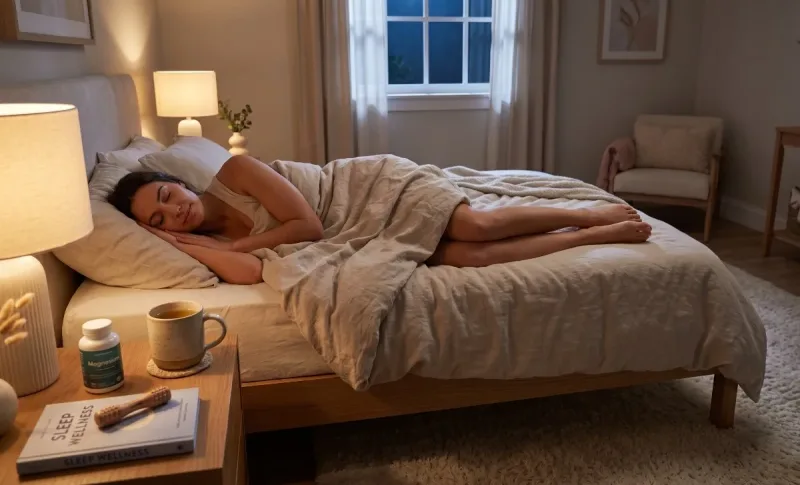
Few experiences disrupt deep, restorative rest quite like a sudden, searing nocturnal calf spasm. Known clinically as nocturnal leg cramps (NLCs) or colloquially as "charley horses," these involuntary contractions of the calf, foot, or hamstring can snap you awake in seconds, leaving your muscles sore and tight long after morning arrives.
If you find yourself jolted awake by intense spasms, learning how to relieve painful leg cramps at night naturally while sleeping is essential for protecting both your sleep quality and neuromuscular health.
In this comprehensive guide, we examine the underlying physiological mechanisms behind nighttime cramps, offer immediate hands-on steps to stop active spasms, explore dietary and electrolyte strategies, provide a bedtime stretching sequence, and answer the five most common questions about nighttime cramp prevention.
Medical Disclaimer
Medical Disclaimer: The information provided in this article is for educational and informational purposes only and is not intended as medical advice, clinical diagnosis, or a substitute for professional healthcare guidance. While nocturnal leg cramps are frequently benign, frequent or escalating spasms may occasionally point to peripheral artery disease (PAD), deep vein thrombosis (DVT), electrolyte disorders, spinal stenosis, or peripheral neuropathy. Always consult your primary care physician, neurologist, or vascular specialist before starting new supplementation routines or if spasms accompany leg swelling, skin discoloration, or persistent numbness.
Understanding Nocturnal Leg Cramps: Why Do They Happen Overnight?
Nocturnal leg cramps affect up to 60% of adults at some point in their lives, with incidence rates increasing significantly over age 50. Unlike restless legs syndrome (RLS)—which causes an uncontrollable urge to move the limbs accompanied by crawling sensations—nocturnal leg cramps are true physical, involuntary contractions where muscle fibers lock into sustained tetany.
Several biological factors converge while you sleep to trigger these intense spasms:
-
Muscle Shortening (Plantar Flexion): When you lie on your stomach or back, heavy sheets naturally press the toes downward into a position known as plantar flexion. In this position, the calf muscles (gastrocnemius and soleus) remain shortened. A hyperactive motor neuron firing into an already-shortened muscle easily precipitates a full cramp.
-
Motor Neuron Hyperactivity: Aging, prolonged sitting, and nerve irritation cause spinal motor neurons to misfire. When these peripheral nerves send erratic signals to muscle fibers during the transition between sleep stages, muscles contract abruptly without the brain's inhibition.
-
Electrolyte and Fluid Fluidity: Mild dehydration or imbalances in serum and intracellular minerals—specifically magnesium, potassium, calcium, and sodium—impair the active transport pump ($Na^+/K^+$ ATPase) that allows muscles to relax after contracting.
-
Poor Microcirculation: Cold sleeping environments or sitting statically for 8+ hours during the day limits microvascular circulation in the lower extremities, starving calf tissue of adequate oxygen and cellular ATP.
What to Do Mid-Spasm: Immediate Relief Tactics
When a cramp strikes in the middle of the night, every second counts. Execute these four steps to abort the spasm immediately:
1. The Passive Dorsiflexion Reset
Do not point your toes downward. Pointing your toes shortens the calf muscle and worsens the spasm.
-
Reach down, grasp your toes, and pull them firmly up toward your knee (dorsiflexion).
-
If you cannot reach your toes from bed, loop a towel, robe belt, or bed sheet around the ball of your foot and pull backward with both hands while keeping your knee straight.
2. Stand and Bear Weight
Getting out of bed and placing flat, direct weight on the cramped leg activates the Golgi tendon organ—an internal tension receptor inside tendons that forces the spasming muscle to reflexively relax:
-
Step onto a flat, cool floor.
-
Lean slightly forward against a wall, pressing the heel of the cramped leg firmly down into the floor until the muscle releases.
3. Apply Targeted Heat, Then Gentle Massage
If the cramp lingers:
-
Place a heating pad, warm hot water bottle, or warm towel against the knot. Heat dilates constricted arterioles, restores oxygen supply, and relaxes spasming fibers.
-
Using your thumbs or palm, knead the belly of the calf muscle upward toward the heart to encourage pooled metabolic waste to flush away.
Nutrition and Hydration: Fueling Muscle Relaxation
A foundational pillar of how to relieve painful leg cramps at night naturally while sleeping is fixing biochemical and electrolyte imbalances. Muscles require balanced levels of water and key electrolytes to conduct nerve impulses and transition between contraction and relaxation.
1. Magnesium: The Body’s Natural Muscle Relaxant
Magnesium acts as a physiological calcium blocker. While calcium triggers muscle fiber contraction (by binding to troponin C), magnesium competes for these binding sites to allow muscle fibers to untangle and relax. Suboptimal cellular magnesium levels leave muscle cells prone to hyper-reactivity.
-
Whole Food Sources: Pumpkin seeds, chia seeds, almonds, dark leafy greens (spinach, Swiss chard), avocados, and unsweetened dark chocolate (70%+).
-
Bioavailable Forms: If utilizing supplements under physician guidance, choose magnesium glycinate or magnesium malate, as they offer high intestinal absorption with minimal laxative side effects.
2. Potassium and Sodium Balance
Potassium operates inside cells, while sodium balances fluids outside cells. Sweating heavily during daytime exercise or drinking excessive amounts of plain water without electrolytes can dilute blood sodium (hyponatremia) and deplete potassium, sparking nighttime twitching.
-
Potassium Champions: Sweet potatoes, coconut water, bananas, cooked lentils, and white beans.
3. Consistent Daytime Hydration
Cartilage and skeletal muscle tissue are roughly 75% water. Sipping water steadily throughout the daytime ensures muscle cells maintain osmotic pressure. Avoid "chugging" a quart of water right before bed, as waking up frequently to use the bathroom fragments sleep architecture and exacerbates tossing, turning, and accidental foot pointing.
4 Nightly Stretches to Do Before Bed
Performing light eccentric calf and hamstring stretches right before climbing into bed is clinically proven to lower the frequency and intensity of nocturnal spasms. Complete this routine nightly in under five minutes:
1. The Classic Wall Calf Stretch
-
Stand arm’s length away from a wall, placing both palms flat against it at shoulder height.
-
Step the affected leg straight back, keeping the heel pressed into the ground and toes pointing forward.
-
Bend your front knee while keeping your back knee straight until you feel a deep, comfortable stretch down the belly of your rear calf.
-
Hold for 30 seconds. Repeat 3 times per side.
2. The Bent-Knee Soleus Stretch
-
Return to the wall-stretch position, but this time, slightly bend your rear knee while keeping the heel pressed into the floor.
-
Bending the knee targets the deeper soleus muscle located beneath the larger gastrocnemius.
-
Hold for 30 seconds per leg.
3. Seated Hamstring Strap Stretch
-
Sit on the edge of your bed or a yoga mat with your legs outstretched.
-
Loop a strap or towel around the ball of one foot.
-
Keeping your back straight, hinge forward gently at the hips until you feel a smooth stretch along the back of your thigh and upper calf.
-
Hold for 45 seconds per leg without bouncing.
4. Ankle Alphabet Rotations
-
While seated or lying down, lift your feet and "trace" the letters of the alphabet in the air using your big toes.
-
This dynamic mobility drill lubricates ankle joints, releases tendon tension, and balances micro-motor unit recruitment before you fall asleep.
Sleep Environment and Ergonomic Adjustments
Your sleep environment significantly influences muscle posture. Minor bedding modifications can stop your toes from locking into spasm-inducing angles:
-
Loosen the Tucked Sheets: Tightly tucked flat sheets force your toes into downward plantar flexion throughout the night. Untuck the sheets at the foot of your bed, or use a blanket lifter/foot tent to keep heavy comforters from pinning your feet.
-
Use an Ergonomic Foot Pillow: If you sleep on your back, place a soft pillow underneath your knees or upright against the footboard so your feet rest upright at a neutral 90-degree angle. If you sleep on your stomach, let your feet hang off the bottom edge of the mattress to prevent foot hyper-extension.
-
Keep Lower Extremities Warm: Peripheral vasoconstriction from drafty bedrooms or air conditioning can trigger cramping. Wear loose, breathable cotton socks to bed if your feet regularly feel cold.
Evening Lifestyle Habits That Promote Spasm-Free Sleep
Small daily adjustments can make a big difference:
-
Take a Warm Epsom Salt Bath: Soaking your lower legs in warm water infused with Epsom salts (magnesium sulfate) 20 minutes before bedtime relaxes muscles through both localized thermotherapy and transdermal mineral contact.
-
Incorporate Evening Chamomile Tea: Chamomile contains apigenin and glycine, an amino acid that acts as a natural central nervous system relaxant to suppress erratic spinal reflex loops.
-
Avoid Dehydrating Nightcaps: While alcohol can make you drowsy, it acts as a mild diuretic and disrupts the nervous system's ability to regulate muscle tone, often sparking 3 AM spasms. Opt for unsweetened tart cherry juice or water with a squeeze of fresh lemon instead.
Medical Disclaimer: The information on this website is provided for educational and informational purposes only and is not intended as medical advice, diagnosis, or treatment. Always seek the advice of your physician or other qualified healthcare provider with any questions you may have regarding a medical condition. Never disregard professional medical advice or delay in seeking it because of something you have read here.




Comments
No comments yet. Be the first to ask a question or share an update.
Leave a comment
Your mobile number is never published. Comments appear after review. Website links, email addresses and code are not allowed.