
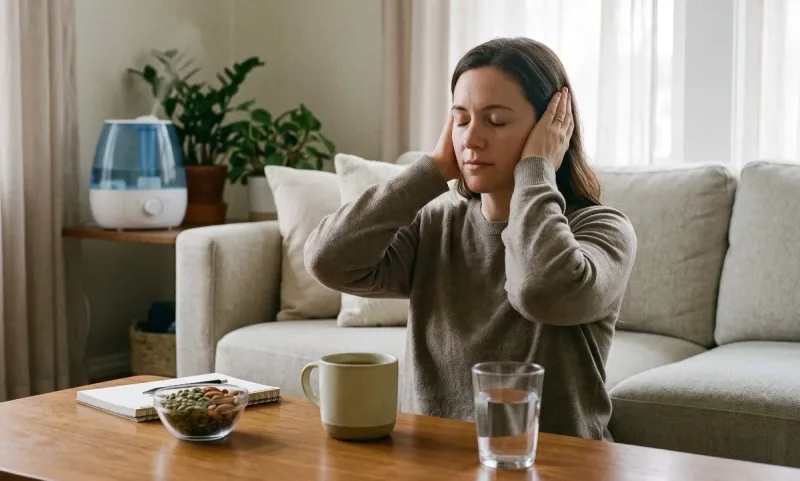
Walking out of a loud concert, sports stadium, construction site, or fireworks display often leaves you with a high-pitched, persistent ringing, buzzing, or hissing sound in your ears. This acute phantom sound—known clinically as temporary acoustic tinnitus—is one of the most common signs of mechanical and metabolic overstimulation within the inner ear.
Understanding natural ways to stop ear ringing after exposure to loud noise helps you support cellular recovery in the cochlea, calm hyperactive auditory nerves, prevent permanent sensory hair cell loss, and soothe the anxiety and irritability that often accompany post-noise ringing.
Below is an evidence-based roadmap explaining what happens inside the ear during acute acoustic exposure, immediate calming strategies, supportive nutritional interventions, bedtime relief setups, red-flag symptoms, and answers to common questions.
What Happens to the Inner Ear During Loud Noise Exposure?
The inner ear houses the cochlea, a fluid-filled, snail-shaped organ lined with tens of thousands of microscopic, delicate sensory cells called stereocilia (hair cells).
When intense sound pressure waves strike the eardrum:
-
Mechanical Hair Cell Bending: Intense acoustic energy violently shears the delicate stereocilia. Just as grass gets flattened after being stepped on repeatedly, the hair cells become physically bent, swollen, and exhausted. When damaged or fatigued, they leak electrical impulses into the auditory nerve ($CN\ VIII$), signaling sound to the brain even when the room is silent.
-
Metabolic Exhaustion and Reactive Oxygen Species (ROS): Loud noise demands enormous energy from cochlear cells. This metabolic overload triggers a massive flood of free radicals and reactive oxygen species inside the inner ear fluids. These free radicals trigger cellular oxidative stress, compromise microcirculation, and damage hair cell membranes.
-
Excitotoxicity: Intense sound triggers excessive release of glutamate, an excitatory neurotransmitter, across the synapses between hair cells and auditory nerve fibers. Unchecked glutamate overexcites auditory receptors, sustaining the phantom buzzing or ringing sound.
-
Auditory Cortex Hyperactivity: In response to reduced or distorted input from fatigued peripheral hair cells, the brain's central auditory processing center turns up its internal volume control (neural gain), amplifying background neurological noise into an audible ring.
Immediate Recovery: First 24 Hours After Exposure
Taking the right steps immediately after exposure prevents further acoustic insult and encourages natural cellular repair.
1. Mandatory Auditory Rest (Low-Stimulus Sanctuary)
-
Avoid Silence Extremes: While you must avoid all loud noise, sitting in an acoustically dead, silent room causes your auditory cortex to increase its sensitivity, making the ringing sound significantly louder and more distressing.
-
Keep Volume Below 60 dB: Spend the next 24 to 48 hours in a peaceful environment. Avoid headphones, earbuds, loud television, or high-volume traffic. Let your sensory stereocilia rest and return to their upright, resting posture.
2. Low-Level Neutral Sound Masking
Rather than focusing on the ringing, give your brain an alternative, non-intrusive soundscape to track:
-
Use pink noise or brown noise rather than harsh white noise. Pink and brown noise have deeper, lower frequencies that mimic falling rain, a gentle waterfall, or a steady wind.
-
Set the sound at a volume slightly below the volume of your ear ringing. This process, known as partial acoustic masking, allows your brain to habituate and gradually filter out the phantom signal.
3. The "Finger Drumming" (Suboccipital Tapping) Technique
Many people experience temporary relief from acute ringing by using a simple manual cranial vibration method:
-
Place the palms of your hands over your ears so your fingers point toward the back of your skull. Your ears should be fully covered by your palms.
-
Rest your middle fingers on the back of your head, just above the base of your skull (the occipital bone).
-
Place your index fingers on top of your middle fingers, and snap them down off the middle fingers so they tap firmly against the skull.
-
Repeat this drumming action 40 to 50 times in a steady rhythm. The acoustic resonance and vibration along the cranial bones can help disrupt spontaneous hyperactivity in the cochlear nucleus.
Nutritional & Cellular Support: Neutralizing Acoustic Stress
Research highlights that targeted antioxidant and electrolyte intake immediately following noise exposure helps protect against permanent noise-induced hearing threshold shifts.
1. Magnesium (The Cochlear Shield)
-
How It Works: Magnesium acts as a physiological calcium channel blocker and controls excessive glutamate release at auditory synapses. It improves cochlear microvascular blood flow and shields inner ear cells against noise-induced metabolic damage.
-
How to Use: Consume magnesium-rich foods like pumpkin seeds, dark leafy greens, almonds, and avocados, or take a gentle magnesium glycinate supplement (200 to 400 mg) with food.
2. High-Dose Antioxidants (Vitamin C, Vitamin E, and NAC)
-
Combating Oxidative Stress: Free radicals continue forming in the inner ear for up to 72 hours after loud noise exposure. Antioxidants neutralize these compounds before they trigger hair cell apoptosis (cell death).
-
Key Compounds:
-
N-Acetyl Cysteine (NAC): A precursor to glutathione, the body's primary intracellular antioxidant. NAC has been extensively studied for attenuating acoustic trauma.
-
Vitamin C & E: Synergistic fat- and water-soluble antioxidants that preserve endothelial integrity and reduce lipid peroxidation in inner ear tissues.
-
3. Systemic Hydration and Electrolytes
-
Dehydration reduces overall blood volume and thickens blood viscosity, decreasing capillary perfusion to the tiny terminal vessels feeding the cochlea.
-
Drink plenty of water and unsweetened electrolyte fluids. Avoid sudden surges of sodium, which can disrupt the delicate fluid balance (endolymph and perilymph) within the inner ear chambers.
4 Calming Practices to Settle Auditory Over-Arousal
Acute tinnitus triggers the sympathetic nervous system ("fight-or-flight"), which raises heart rate and spikes cortisol—further heightening the brain's perception of the noise. Calming your autonomic nervous system is essential for recovery.
1. Diaphragmatic "4-7-8" Breathing
-
Inhale quietly through your nose for a count of 4 seconds.
-
Hold your breath gently for a count of 7 seconds.
-
Exhale completely through your mouth with a soft whooshing sound for 8 seconds.
-
Repeat for 4 full cycles. This stimulates the vagus nerve, reduces systemic arterial tension, and softens the hyper-focus on auditory signals.
2. Acupressure for Ear Decompression
-
Ermen (Triple Energizer 21 / SJ-21): Located in the depression just in front of the ear canal opening, slightly above the ear tragus. Press gently with the tip of your index finger for 60 seconds.
-
Tinggong (Small Intestine 19 / SI-19): Located directly in front of the middle of the ear tragus; opens slightly when your mouth is relaxed open. Apply gentle, circular pressure to relieve ear fullness and jaw tension.
3. Avoid Ototoxic and Stimulating Substances
During the first 48 hours of recovery, avoid substances that elevate blood pressure or stimulate the nervous system:
-
Caffeine & Energy Drinks: Temporarily constricts peripheral micro-vessels.
-
Nicotine: Reduces oxygen supply to cochlear hair cells.
-
High Doses of Aspirin / NSAIDs: High doses of aspirin and certain non-steroidal anti-inflammatory drugs are known to be temporarily ototoxic and can induce or worsen ringing.
-
Alcohol: Disrupts blood flow and dehydrates cellular tissues.
Bedroom Setup: Sleeping with Ringing Ears
Ringing often feels loudest when trying to fall asleep in a quiet room:
-
Use a Bedside Humidifier or Fan: The steady, low hum of a cool-mist humidifier or oscillating fan fills the room with relaxing, low-frequency sound that partially masks high-frequency ringing.
-
Sleep with Head Elevated: Elevating your head 20 to 30 degrees with a supportive pillow prevents venous congestion in the head and neck, lowering pressure sensations inside the ears.
-
Tinnitus Relief Audio: Keep a sound generator playing nature sounds (ocean waves or soft woodland rainfall) on a low timer next to your bed.
Medical Disclaimer: The information in this article is for educational and self-care purposes only and does not substitute for professional medical advice, clinical audiology diagnosis, or specialized ENT care. Sudden hearing loss in one or both ears following loud noise, accompanied by profound dizziness, rotational vertigo, ear discharge, or physical pain, requires immediate medical evaluation by an otolaryngologist within 24 to 48 hours.




Comments
No comments yet. Be the first to ask a question or share an update.
Leave a comment
Your mobile number is never published. Comments appear after review. Website links, email addresses and code are not allowed.