

Experiencing sudden, sharp, or aching pain inside your rib cage is an alarming event. Because the heart, lungs, stomach, and diaphragm share overlapping nerve pathways within the thoracic cavity, your brain frequently struggles to pinpoint the exact origin of internal discomfort. A buildup of trapped intestinal gas can press upward against the rib cage, mimicking the sensation of a serious cardiovascular emergency.
The core difference between gas pain and chest pain in ribs lies in how the pain behaves: gas pain is typically sharp, crampy, or shifting, often worsening when bending or sitting and improving significantly after burping, passing flatus, or walking. In contrast, cardiac chest pain usually presents as a steady, heavy pressure, crushing tightness, or squeezing sensation that does not change with digestive release, often radiating into the left arm, neck, jaw, or back, and frequently accompanied by shortness of breath and cold sweats.
Distinguishing harmless intestinal gas from an acute medical emergency is essential for your peace of mind and physical safety. Below is a comprehensive guide examining why gas gets trapped under the ribs, the precise anatomical mechanisms behind referred pain, and the critical clinical warning signs you must never ignore.
The Anatomical Link: Why Gas Collects Under the Rib Cage
To understand why trapped gas hurts so intensely near the ribs, it helps to examine the layout of the human gastrointestinal tract.
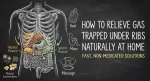
The large intestine (colon) travels up the right side of the abdomen, crosses beneath the stomach, and descends down the left side. As it navigates this path, it forms two sharp, high corners tucked directly beneath the lower margins of the rib cage:
-
The Hepatic Flexure: The bend on the upper right side, situated directly below the liver and right rib cage.
-
The Splenic Flexure: The highest turn on the upper left side, resting directly under the spleen, diaphragm, and left rib cage—positioned inches beneath the heart.
When air or digestive gas accumulates in these high bends, it has difficulty rounding the tight corners. This condition—known clinically as Splenic Flexure Syndrome when occurring on the left—causes localized colonic distension.
The expanded bowel stretches localized visceral pain receptors and pushes upward against the diaphragm. Because the diaphragm shares sensory nerve roots (specifically the phrenic nerve) with thoracic structures, pain signals register as sharp, catching aches under the ribs or lower chest wall.
Key Differences: Gas Pain vs. Heart-Related Chest Pain
Differentiating between these two sensations requires evaluating the quality of the pain, its location, how it responds to movement, and any accompanying symptoms.
Pain Sensation and Quality
-
Gas Pain in the Ribs: Described as sharp, jabbing, cramping, or knife-like. It often feels like an intense, localized stitch or a trapped bubble that builds in intensity and then dissipates. The severity tends to fluctuate over several minutes as intestinal walls contract and relax.
-
Cardiac Chest Pain (Angina or Infarction): Rarely described as a sharp, fleeting stitch. Instead, it feels like heavy, dull pressure, squeezing, fullness, burning, or a crushing sensation—frequently described as an "elephant sitting on the chest" or a tight band compressing the breastbone.
Radiation of Discomfort
-
Gas Pain in the Ribs: Generally stays confined to the lower rib margin, upper abdomen, or occasionally radiates straight through to the shoulder blade on the same side due to diaphragmatic nerve irritation. It does not spread to the jaw or down the arms.
-
Cardiac Chest Pain: Classically radiates outward from behind the sternum into the left shoulder, down the inner side of the left arm (and occasionally the right arm), upward into the throat, neck, lower jaw, or between the shoulder blades.
Triggers and Relief Factors
-
Gas Pain in the Ribs: Often develops 30 to 90 minutes after eating a meal rich in fermentable carbohydrates, drinking carbonated beverages, or eating too rapidly. It noticeably changes intensity when you change body positions, lie down, bend forward, or engage in light walking. Crucially, gas pain eases or resolves completely once you burp or pass gas.
-
Cardiac Chest Pain: Often triggered or intensified by physical exertion (such as climbing stairs or carrying groceries) or severe emotional stress. It does not improve after belching, passing flatulence, taking antacids, or changing posture. Rest or prescribed sublingual nitroglycerin typically relieves true angina.
Symptoms Specific to Gas Trapped in the Rib Cage
If your rib discomfort is purely digestive, it will usually be accompanied by a cluster of telltale gastrointestinal symptoms:
-
Shifting or Migrating Discomfort: The focal point of the pain moves. A pain that starts under the lower left ribs may migrate down into the lower abdomen as peristalsis pushes the gas bubble through the descending colon.
-
Abdominal Bloating and Firmness: The stomach or upper abdomen may feel visibly swollen, distended, or hard to the touch. Tapping gently on the upper left abdomen may produce a hollow, drum-like sound (tympanitic resonance).
-
Pain Triggered by Deep Inhalation: When you take a deep breath, your diaphragm contracts downward, squeezing the gas-filled splenic flexure and causing a momentary sharp catch under the rib cage.
-
Audible Bowel Sounds (Borborygmi): You can often hear or feel loud gurgling, rumbling, or bubbling movements within the gut shortly before the rib pain eases.
-
Post-Meal Timing: Symptoms frequently follow meals containing known gas-producing foods like beans, onions, cruciferous vegetables, dairy products (in lactose-intolerant individuals), or carbonated sodas.
Warning Signs That Require Emergency Medical Care
Because a heart attack can present atypically—particularly in women, older adults, and individuals with diabetes—chest discomfort should never be casually dismissed as "just gas" if high-risk symptoms are present.
Call emergency services (such as 911 or your local emergency number) immediately if rib or chest pain occurs alongside any of the following red-flag symptoms:
-
Sudden, Unexplained Shortness of Breath: Feeling winded, gasping for breath, or unable to catch your breath while resting or performing minimal movement.
-
Cold Sweats and Clamminess: Breaking out into a sudden, drenching cold sweat without an elevated room temperature or physical exertion.
-
Lightheadedness, Dizziness, or Syncope: Feeling faint, woozy, or experiencing sudden loss of consciousness.
-
Nausea and Unexplained Vomiting: Nausea paired with heavy, central chest pressure or back pain (a common presentation in women).
-
Pain Radiating to the Neck, Jaw, or Left Arm: Any pressure that travels upward into the throat, lower teeth, jawline, or down the arm.
-
A Feeling of Impending Doom: A profound, sudden intuitive sense of panic, impending collapse, or dread accompanying thoracic tightness.
Fast Home Techniques to Release Rib Gas Safely
If you have carefully evaluated your symptoms, ruled out cardiac warning signs, and determined that trapped digestive gas is the source of your rib pain, several non-medicated physical techniques can help expel the pocket quickly.
1. The Wind-Relieving Pose (Pawanmuktasana)
This classic yoga posture applies gentle, rhythmic compression to the ascending and descending colonic tracts, helping guide gas bubbles past the hepatic and splenic flexures.
-
Lie flat on your back on a firm mat or carpeted floor.
-
Inhale, bend your knees, and bring them upward toward your chest.
-
Clasp your arms around your shins or behind your thighs, pulling your knees gently toward your torso.
-
Hold the position for 30 to 60 seconds while taking slow, diaphragmatic breaths.
-
Gently rock your knees from side to side to massage the abdominal organs and encourage gas release.
2. Forward Torso Twist and Reach
Torso rotation mechanically decompresses the transverse colon and helps open the tight angles beneath the rib cage.
-
Sit upright on a firm chair with your feet flat on the floor.
-
Inhale deeply, lengthening your spine.
-
As you exhale, gently twist your upper body to the left, placing your right hand on your outer left knee and your left hand on the back of the chair.
-
Hold the stretch for 15 seconds, return to center, and repeat on the right side.
3. Clockwise Abdominal Massage
Massaging the abdomen along the natural path of the large intestine moves stagnant stool and trapped air toward the rectum.
-
Lie on your back with your knees slightly bent and feet flat.
-
Place your fingers on the lower right side of your abdomen (near the hip bone).
-
Apply gentle, firm circular pressure, moving upward along your right side to the bottom of the right ribs.
-
Sweep across the upper abdomen just beneath the rib cage to the left side.
-
Move downward along the lower left abdomen toward the pelvis.
-
Repeat this clockwise loop for 3 to 5 minutes to guide trapped air past the splenic bend.
4. Drink Warm Fennel or Ginger Water
Warm fluids stimulate the gastrocolic reflex, which prompts the colon to contract and clear contents.
Steeping a half-teaspoon of crushed fennel seeds or fresh sliced ginger in hot water creates a gentle carminative drink. The anethole in fennel and gingerols in ginger relax the smooth intestinal muscle wall, allowing trapped gas bubbles to break apart and pass effortlessly.
Long-Term Strategies to Prevent Trapped Rib Gas
Frequent bouts of gas pain under the ribs suggest that your digestive system is struggling with aerophagia (air swallowing), slow transit, or food intolerance.
-
Eat Slowly and Chew Thoroughly: Rushing through meals causes you to swallow significant pockets of air, which collect in the stomach and upper bowel. Eat in an upright position and chew food completely.
-
Identify Fermentable Carbohydrate Sensitivities: High-FODMAP foods (such as garlic, onions, legumes, apples, and wheat) feed bacteria in the gut, producing excessive hydrogen and methane gas. Keeping a 7-day food diary helps pinpoint personal triggers.
-
Eliminate Carbonated Beverages: Sodas, sparkling waters, and beer introduce large volumes of dissolved carbon dioxide directly into your digestive tract.
-
Stay Active After Eating: Avoid lying flat on a couch or bed immediately after dinner. A gentle 10-to-15-minute walk keeps abdominal contents moving downward and prevents gas from pooling under the diaphragm.
Medical Disclaimer: The contents of this article are intended strictly for educational and informational purposes and do not replace professional medical advice, emergency assessment, diagnosis, or treatment. Never attempt to self-diagnose severe or unfamiliar chest pain. If you suspect you are experiencing a cardiovascular event, contact local emergency services immediately.


Comments
No comments yet. Be the first to ask a question or share an update.
Leave a comment
Your mobile number is never published. Comments appear after review. Website links, email addresses and code are not allowed.