
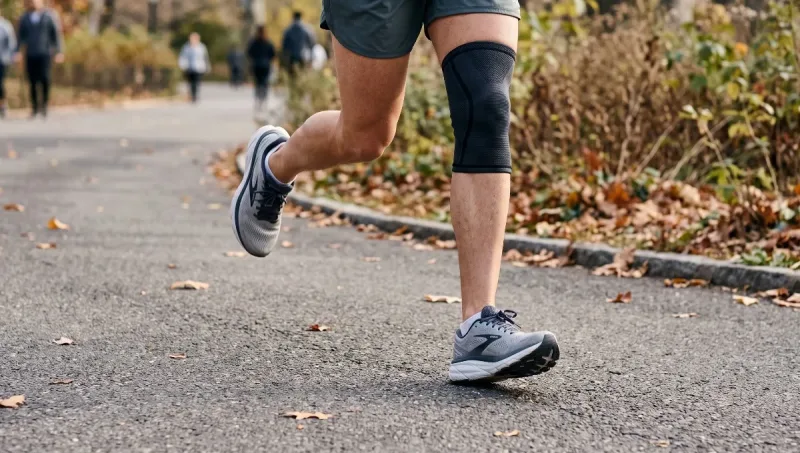
Starting a jogging routine is one of the best decisions you can make for your cardiovascular health, stamina, and mental clarity. However, within just a few weeks of beginning, many new runners encounter a dull, throbbing ache right behind or around the kneecap. This common condition—medically known as patellofemoral pain syndrome (PFPS) and colloquially called runner’s knee—derails beginner training plans faster than almost any other running injury.
The most reliable strategy to prevent painful runner knee when starting a jogging routine focuses on gradually increasing running mileage, building hip and quadricep strength, increasing your step cadence to avoid overstriding, wearing properly fitted running shoes, and integrating structured warm-ups. Protecting the patellofemoral joint early allows connective tissues to adapt naturally without inflammation or cartilage breakdown.
Understanding the biomechanics of your knees and implementing proactive habits will keep your training enjoyable, sustainable, and entirely pain-free.
What Causes Runner’s Knee in Beginners?
The knee joint is essentially a hinge trapped between your hip and your foot. The kneecap (patella) sits inside a groove on your thigh bone (femur), gliding up and down with every step you take. When muscle imbalances, poor running mechanics, or rapid mileage increases occur, the patella tracks unevenly across this groove, rubbing against bone and inflaming cartilage.
-
Sudden Spike in Volume (The "Too Much, Too Soon" Trap): Cardiovascular fitness often improves faster than bone density, cartilage, and tendon durability. When beginners run too far or too frequently before connective tissues adjust, chronic repetitive strain occurs.
-
Weak Hip Abductors and Glutes: The gluteus medius stabilizes your pelvis when you land on one leg. If this muscle is weak, the thigh bone angles inward (valgus collapse), shifting the kneecap off-center during impact.
-
Overstriding and Low Cadence: Reaching your foot out too far ahead of your center of gravity acts like a brake. This forces the knee to absorb excessive downward shock with every single heel strike.
-
Tight Quadriceps and Hamstrings: Chronically tight leg muscles act like taut cables, pulling the patella firmly against the femur and multiplying friction under load.
-
Worn or Improper Footwear: Running in old sneakers, lifestyle shoes, or footwear without adequate arch or stability support alters your ankle biomechanics, causing rotational torque straight up into the knee joint.
1. Follow the 10 Percent Progression Rule
The primary mistake beginner runners make is doing too much mileage too quickly. Your muscles and cardiovascular system may feel capable of running daily, but your cartilage and tendons take much longer to adapt to repetitive impact forces.
-
Limit Weekly Increases: Never increase your total weekly running distance or duration by more than 10 percent from one week to the next. For example, if you jog a total of 10 kilometers this week, your maximum volume for the following week should not exceed 11 kilometers.
-
Use the Run-Walk Method: Instead of trying to jog continuously for 30 minutes on day one, use interval training. Alternate 1 to 2 minutes of light jogging with 1 to 2 minutes of brisk walking. Walking intervals give the patellofemoral cartilage a temporary break from high impact, preventing localized heat and swelling.
-
Designate Rest Days: Never run on consecutive days when you first begin. Schedule at least one complete rest day or light non-impact cross-training day (like swimming or cycling) between jogging sessions to let tissue micro-tears repair.
2. Adjust Your Running Cadence and Stride Mechanics
Altering how your feet touch the ground dramatically reduces the direct impact load delivered to your patella on every step.
-
Increase Your Step Rate (Cadence): Aim for a cadence close to 170 to 180 steps per minute. Beginners often jog at a slow 150 to 155 steps per minute with long, heavy bounds. Shortening your stride and taking quicker, lighter steps reduces knee impact forces by up to 20%.
-
Land Beneath Your Center of Mass: Ensure your landing foot strikes the ground almost directly beneath your hips and slightly bent knee, rather than reaching far in front of your body.
-
Focus on a Midfoot Strike: Avoid planting your heel hard into the ground with a locked knee joint. Aim for a soft, quiet midfoot landing that engages your calves and quads naturally as shock absorbers.
-
Run "Softly": Listen to your footsteps. If your feet slap loudly against the pavement, you are transferring unnecessary shock into your joints. Imagine running across thin ice or trying to run quietly without waking someone in the next room.
3. Strengthen Key Supporting Muscle Groups
Runner’s knee is rarely just a "knee problem"—it is almost always caused by weakness above and below the joint. Building the glutes, hips, and thighs stabilizes your leg alignment so the patella glides smoothly.
-
Side-Lying Clamshells and Leg Raises: Lie on your side with a resistance band around your thighs. Open your top knee while keeping feet together, or lift the straight top leg upward. This activates the gluteus medius, preventing the knee from caving inward during jogging. Perform 3 sets of 15 repetitions on each side.
-
Glute Bridges: Lie on your back with knees bent and feet flat on the floor. Squeeze your buttocks and lift your hips toward the ceiling. Hold for 2 seconds at the top to awaken the glutes, which take running strain off the front of your thighs.
-
Wall Sits with Proper Alignment: Lean flat against a wall and slide down until your knees form a 90-degree angle. Ensure your knees stay stacked directly above your ankles, never past your toes. Hold for 30 to 45 seconds to build isometric quadricep endurance around the kneecap.
-
Eccentric Step-Downs: Stand on a small step or low sturdy box. Slowly lower one foot toward the floor by bending the supporting leg, taking 3 seconds to lower down, then return to standing. This builds resilience in the vastus medialis oblique (VMO), the inner teardrop muscle responsible for kneecap tracking.
4. Prioritize Dynamic Warm-Ups and Post-Run Mobility
Never step out your front door and immediately burst into a jog with cold, stiff leg muscles. Prepare your joint capsule first, and cool it down properly afterward.
-
Dynamic Warm-Up (5 to 7 Minutes): Skip static, motionless stretching before running, as it temporarily reduces muscle power. Instead, perform dynamic movements: walking lunges, butt kicks, high knees, leg swings (forward/backward and side-to-side), and ankle rotations. This circulates synovial fluid inside the knee capsule.
-
Targeted Post-Run Quad Stretching: After finishing your jog, while your muscles are still warm, gently pull your heel toward your glute while standing tall to stretch the front of your thigh. Keep your knees touching and your pelvis tucked. Hold for 30 seconds per leg to keep the rectus femoris from pulling the patella tight.
-
Foam Roll the IT Band and Hips: Use a foam roller along your tensor fasciae latae (TFL), quadriceps, and calves. Do not roll directly over the bony side of your knee joint; instead, release the soft muscular tissue higher up on the side of your hip to reduce tension on the iliotibial band.
5. Invest in Proper Running Shoes and Running Surfaces
Your shoes and the terrain under your feet dictate how shock waves travel through your skeletal system with every stride.
-
Get Fitted at a Specialty Running Store: Avoid buying running shoes based purely on appearance or brand hype. Visit a store where a specialist can watch your gait on a treadmill. They will determine whether you have neutral arches, overpronation (inward foot collapse), or supination, and recommend shoes with the correct level of cushioning and structural stability.
-
Retire Old Footwear on Time: Running shoe midsole foams degrade long before the outer rubber looks worn out. Replace your running shoes every 500 to 800 kilometers (300 to 500 miles). Once internal foam compresses and loses rebound, impact forces transfer directly into your knees.
-
Choose Softer, Forgiving Surfaces: Concrete sidewalks are the hardest and least forgiving surface for a beginner runner. Whenever possible, run on asphalt roads (which are slightly softer than concrete), compacted dirt park trails, crushed gravel paths, or a synthetic rubber running track.
How to Recognize the Warning Signs Early
Runner’s knee rarely appears out of nowhere; it gives subtle warning signals before turning into severe pain:
-
The Stairs Test: Feeling a dull ache behind your kneecap when walking down a flight of stairs or downhill is often the very first indicator of patellofemoral irritation.
-
The "Moviegoer's" Sign: Feeling stiffness and an urge to straighten your leg after sitting with bent knees for long periods (like at a desk or in a theater).
-
Crepitus (Clicking or Grating): A painless grinding or popping sensation inside the knee during deep squats can indicate uneven patellar tracking that needs immediate attention.
-
Action to Take: The moment you feel knee discomfort during a run, stop and walk home. Applying ice for 15 minutes, taking a two-day rest, and cross-training with swimming or cycling will resolve mild irritation before it turns into chronic inflammation.
Medical Disclaimer: The information provided in this guide is for educational and informational purposes only and does not constitute medical advice, diagnosis, or treatment. Always consult a qualified physician, physical therapist, or sports medicine specialist before beginning any new training program or if you experience persistent knee pain.


Comments
No comments yet. Be the first to ask a question or share an update.
Leave a comment
Your mobile number is never published. Comments appear after review. Website links, email addresses and code are not allowed.